Star Spangled Christian Nationalism
with April Ajoy
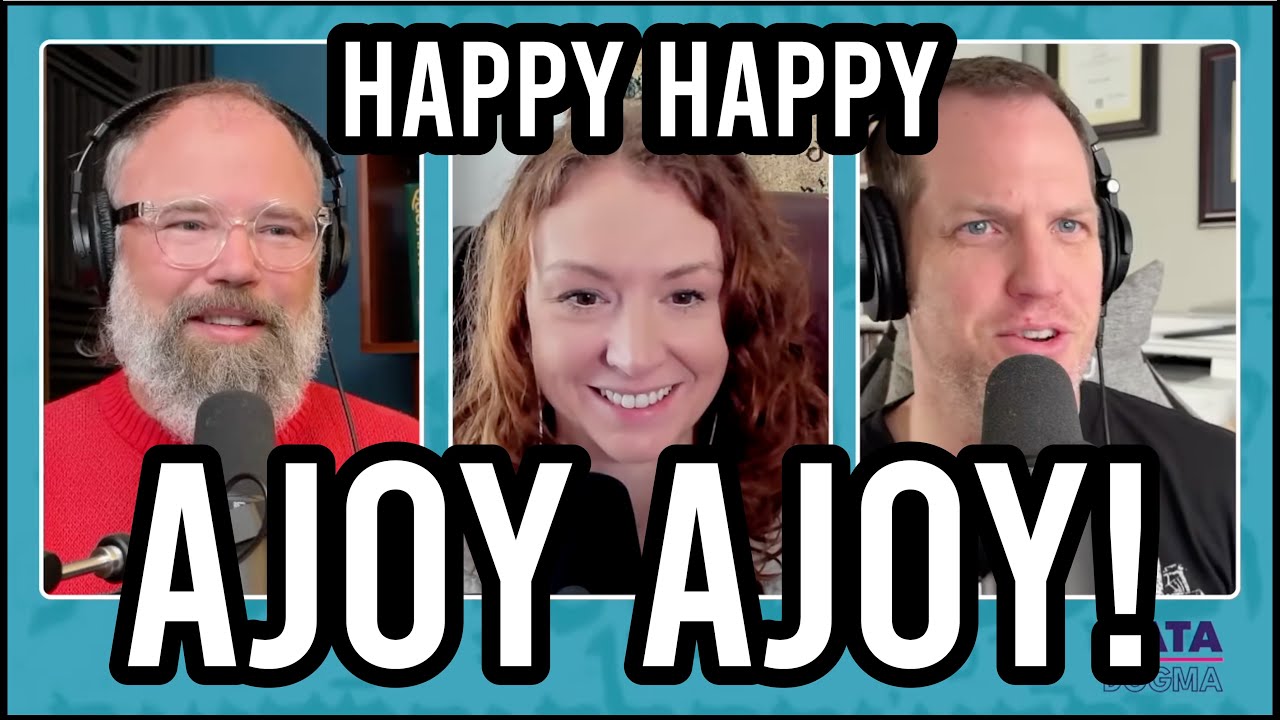
The Transcript
Like, when I take a step back, I’m like, no, y’all are demonizing me. And you’re celebrating this man as someone that Jesus would, would choose to lead our Christian nation. I’m like, are you reading the Gospels at all? Hey, everybody, I’m Dan McClellan. And I’m Dan Beecher. And you are listening to the Data Over Dogma podcast where we increase public access to the academic study of the Bible and religion and combat the spread of misinformation about the same. How are things today, Dan? It’s a star-spangled day here on the Data Over Dogma show. I noticed you’re wearing a red sweatshirt and yeah, yeah, my first impression was a Buffalo Bills jersey and I was like, it can’t be that. No, it’s not that because, I mean, you should be happy. These are, these are Denver Bronco colors. Yes. Mostly I’m just kind of an orange and orangey red and blue. Anyway, let’s get off of fashion because most of our, our listeners, at least our YouTubers can see, but our listeners can’t see what I’m wearing. And let’s get on to our, our guest this week. Do you, do you want to introduce her, Dan? Yeah, absolutely. Today we are very privileged to have with us April Ajoy. Welcome to the show, April. Hello. Thank you for having me. Thank you for being here. We appreciate it very much. And April is the author of a new book, Star-Spangled Jesus: Leaving Christian Nationalism and Finding a True Faith. April is another content creator, a podcaster who hosts the Friday shows of The New Evangelicals and is also has been working in journalism to one degree or another for, for quite some time. She has been featured on BuzzFeed, CNN, Newsweek and more. And she’s been married to Beecher for 10 years and they have two daughters together, which is wonderful. I, I am a girl dad with three. Some people might be a little more interested to hear about this Beecher connection, but. Well, I mean, I’m going to save it. We’re going to save it, save some of the Beecher talk for the, for the after party. There we go. If so, if you’re really interested in some wacky name talk about Beecher, make sure that you’re a patron and come over on Patreon. It’s not that common of a name. No, it is. No, it is not. It is not so there. And, and, and even less common, I think, as a, as a first name. So, yes. So yes, your, your partner is, is, is in rarefied air. But I have met one other person with, with the name, the first name, Beecher and that story later. Yeah, and, and April, you also are. You. You are a TikToker. You are a. You, you, you, you. You put a lot of content out into the world. I think a lot of our listeners probably follow you on TikTok and, and in other places. Yeah, that’s kind of where it all started on TikTok. So I don’t know what, what the future of TikTok. Yeah, yeah, yeah. You two TikTok people are screwed. But that’s, that’s what, that’s why we have a podcast. So. Yeah, well, and, and I know April from. Mainly from a lot of thought provoking content on social media, particularly TikTok and, and elsewhere, but also a lot of comedy. You like to, to do some role playing skits and, and use comedy to kind of, I don’t know, break down walls of defenses, but at least get some, a little bit of joy out of, out of what you’re doing, which is, which is primarily combating Christian nationalism, combating a lot of the harm that is inherent in Christian nationalism and the kind of, the kind of fundamentalist conservative evangelical Christianity that is so prominent these days. Can you talk a little bit about. We’ll, we’ll get to the content creation later, but can you get everybody up to speed on your background? Sure, if that’s not, if that’s not too big an ask. I mean. Yeah, because you are. I mean, let’s, let’s set the scene, man. You. This book, Star-Spangled Jesus, which by the way, is a, is a fun exploration of Christian nationalism and everything starts with the confession that you were unknowingly a Christian nationalist yourself. Yes. And I do think, you know, as I’ve studied this topic and then reflected on my own time inside, you know, conservative white evangelicalism, I’ve realized that one reason why it’s so, it can be so difficult to stop Christian nationalism is because it kind of hides in plain sight of just American evangelicalism. And that so much, so many people, and I think even today, most people who perpetuate Christian nationalism don’t realize that their faith has been co-opted by that ideology. You, you came into this pretty heavy. You, you basically came out swinging because you were a pastor’s kid, right? I was, I was a combo because I was a pastor’s kid. My grandfather was a pastor of a large church in Dallas when I was growing up. And this was in the 80s and 90s, so megachurches really, like, they weren’t really a thing back then. But my grandfather’s church had 4,000 members at the time, so that was pretty big. That’s pretty. My dad, my dad co-pastored with him when we were home. So I had the pastor’s kid experience. But my dad was also an evangelist and kind of a missionary in different points. So we traveled. I was homeschooled. By the time I was 18, I’d been to 31 countries. And then when we were stateside, we traveled in a motorhome going to all these different churches and my dad would preach, and then me and my two brothers and my mom, we would sing before he would preach. It was kind of like a family affair. Very immersive. And almost none of your life was not about Christianity and Jesus. I mean, the motorhome that you traveled in was plastered with the phrase America Say Yes to Jesus. Is that right? Yeah, that was our second motorhome. Oh, okay. That was post-9/11 when we really kind of amped up the nationalism part. Wow. Oh man. So The Righteous Gemstones was probably just a slightly wealthier version of what you grew up with in some ways. Yeah. I would say there’s definitely similarities to The Righteous Gemstones, minus the cussing. Okay. And yeah, I would say, like, I wish they would have tapped—this is a total sidebar, but I wish HBO would have tapped someone from that world or just because there’s so many ways to make that world genuinely funny. That’s a little more true because some of the stuff that’s in that show, I’m like, eh, yeah, yeah. I don’t think that that’s as realistic, but yeah. Are you listening HBO? April is putting herself out there. Yeah, hire me. I can be a writer. And I don’t want to even get into Netflix and their Mary show, which they only consulted with somebody with a BA. But anyway, Mr. PhD over here—it’s not a big deal. But you mentioned that this is something a lot of Christians aren’t even aware has co-opted evangelical Christianity. And something that was a through-line of a lot of these chapters was you talking kind of about how you felt intuitively about these things. And there was a slow shift as intuitively it began to make less and less sense to you. And intuitively it began to feel more and more natural to sympathize with the folks that were on the other side of the aisle from you in your childhood. And that’s something that within the cognitive science of religion, there’s a lot of research on how our intuitive cognition frames our experience of the world around us and our understanding of ourselves. Could you talk a little bit about what kind of experiences let you know there’s something intuitive going on here, there’s something internal to this experience that contributed to this transition? Yeah. I mean, gosh, where does one begin? I do think, like, within this world, you have to hold so much cognitive dissonance. And so when you start to question one thing, it just kind of opens up like you’re just more vulnerable to questioning so many things all at once, which is why you’re taught from childhood—especially people who are born into a fundamentalist religion—you’re taught from an early age to not ask questions and that questions are almost dangerous. They’re the start to the slippery slope. And if you ask too many questions, then one day you’re going to wake up, you’re going to be an atheist, and then you’re going to burn in hell forever, like hellfire. And where you spend eternity is a big component to the belief system. And so—but there were like little things along the way. Like, one thing that Christian nationalism relies on is American exceptionalism because we were taught that God supernaturally blessed America, that God gave the land to George Washington, who, you know, he’s like a disciple, disciple too. That, you know, even. Even what happened with the indigenous people was really a blessing for them because we were able to convert them and save their souls. Like, you kind of. You’re not really taught the true history like I was taught. Christopher Columbus was a good Christian missionary. And so there’s this, like, you. You are kind of shielded, especially if you are homeschooled or given Christian curriculum or more conservative curriculum, you’re shielded from a truer history of America because if you believe that God is good and that God basically gave America and founded America as a Christian nation, then you can’t look at America as ever being the bad guy. And so once you’re able, because if America was ever bad, then you have to question in God’s sovereignty and if God is good or not, because the two are so interconnected, because you believe America is a Christian nation and we have to save America because God will only bless us if we continue to be Christian. And then that’s why you see these culture wars of people fighting gay marriage or abortion or, you know, things that they would deem that we deemed sin, sin. And that because, like Hurricane Katrina, it’s like, well, God allowed that to happen because we’ve let sin into our country. And the way to stop that, it’s not climate change, it’s God judging us because we’ve. We are no longer righteous because we’ve kind of. We’re starting to lose our Christian nation. So. But once you, once you learn the true history of like, well, we committed genocide, genocide against indigenous people and that Christians were using the Bible to justify slavery in the Civil War and that they used it to justify segregation and Jim Crow and, you know, all of these things that point that show Christians in a bad light, then suddenly you. You lose a good chunk of your foundation of your belief system. And so learning, you know, like, true history, like those, those things kind of started shining light. Like, I remember during post 9/11 when we were dropping bombs on Iraq looking for, you know, weapons of mass destruction. I remember feeling conflicted about that. But, you know, the, the Christians around me were like, no, this is like a righteous holy war. You know, they, the Muslims deserve it because their, their religion is demonic and all these things. We’re Christians. We’re. We’re. We’re of God. We’re of the one true God. But I remember, like, but we’re bombing innocent people. And I was able to kind of squash those thoughts for a while and feel like I had to defend America because if I didn’t, then I’m going through an existential crisis that I was not prepared to go through. But it was like little things like that along the way that just intuitively I kind of thought about introspectively. But I had enough people around me and watching Fox News and listening to conservative radio and hearing a pastor every Sunday tell me the opposite that it kept. It keeps people in the belief system because Christian nationalism and evangelicalism, like, they’re especially like the Seven Mountain Mandate, which is a dominion theology, which, which basically is the belief that Christians have to be in control and have dominion of the seven main influences in the world before Jesus can come back. And so that’s why they basically, they want to have major influence in media, they want to have influence in entertainment. They want people inside their ideology to not have to go to anyone secular they can get everything from this Christian conservative perspective. So you really are built in a giant echo chamber unless you intentionally seek out other things. But if you do that and you’re still in it, you have all these people being like, you can’t trust that source any because anything not Christian is satanic. And so, you know, I think there’s like a new rise in satanic panic too, where anything not Jesusy is of the devil and they’re trying to. The devil’s coming after your children. Like there’s that one Pastor Kent Christmas from the pulpit cursed the Barbie movie because of wokeness or whatever. And then another pastor said that the Barbie movie would unleash millions of demons onto your children. You know, and like, so it’s like, it’s just silly stuff like that. But there’s people that genuinely believe that. And so all this fear mongering gives people a reason to doubt their own doubts. Well, and, and it also, I, I think it primes people, you know, when, when you are trained from birth, as you were, to to believe in all of these demons, to believe that, you know, everyone that isn’t with us is satanic, is awful, is bad. Yeah, I mean, the rapture theology is a huge belief in a lot of mainstream evangelicalism that doesn’t get talked about too much. Like you don’t hear about it unless you’re inside as much. But that I believed that until I was like 30. Like as a grown woman, I believe that at any moment I’d hear a distant trumpet and that I’d get sucked up into the sky naked to meet Jesus in the air because that’s like Left Behind canon, like the pile of clothes behind. Which is weird because we’re also purity culture. So I guess like once you’re floating in the sky, like the lust thing isn’t a problem anymore, but maybe, maybe magical, like fig leaves will appear for you. Maybe. Yeah. I don’t know. But yeah, but like if you can believe that, which wasn’t a mainstream belief in Christianity until the 1800s. And I was pissed when I learned that because I was taught like that this is basically like Apostle Paul canon, you know, And I’m like, yeah, so. But, yeah, but if you can believe that, then it’s not hard to believe that there’s this evil secret society that’s controlling everything that sacrifices babies to Satan and drinks children’s blood to stay young. Like that’s. You already believe in the big bad Satan. So it’s. Yeah, it’s an easy jump to make. And, and all the, the heathens believe that, that the world was created out of nothing, through magic anyway, or some. Or through the Big Bang, which. Right. It takes more faith to be an atheist. Yeah. And. And this, and these are, these are things that you’re conditioned as a child to accept. And if that is the foundation of your worldview, if, if those are the logs that build the foundation of your worldview, then it’s not difficult to interpret new information in light of that. That becomes the interpretive lens that lenses through which you see all this new stuff. And, and naturally you’re going to want to interpret it according to your worldview, make it fit, find a place for it to fit until suddenly it won’t fit. And you shared a story in your book that I rather enjoyed about working. I don’t know if you were with CBN or you were doing journalism of some kind. You were sent out to do an interview with a gay couple. Oh, yeah. I was interning at the Dallas NBC. The Dallas. I used to live just north of Frankford and the Tollway and, and that’s where I, that’s where I actually became LDS. And I left to go live in Uruguay for a couple years doing a proselytizing mission down there. Our church was right across the street from Prestonwood Baptist Church. But, but so I know the area well. It was, it was fun to, to hear some of those names again. But can, can you walk through this story briefly about this? This time something didn’t seem to fit the way you had been conditioned to structure your worldview. Yeah. So I got my master’s in journalism at Regent University, which is Pat Robertson’s school. It’s on the same campus as CBN, which is the Christian Broadcasting Network. So for my summer internship as part of that program, I got an internship at the NBC DFW affiliate. And, and my first day on the job. And you have to understand too, at Regent, they kind of trained us to like, their motto is “Christian Leadership to Change the World.” So there, there was this, you know, underlying message that no matter what job you have, even if it’s, it’s in the secular world, like you’re still called to be a Christian first. And that your job is like, wherever you are, that’s your mission field. So you’re kind of so intense. Yeah, no, yeah. I mean, and that was nothing new. I had already believed that from a child like, that there’s no greater calling than trying to win souls for Jesus. And that you should do that wherever you are. So keep that in mind. Like, that’s my mindset. My very first day at this internship, they assigned me to do an interview of this gay couple because they were in. They were getting some. Some pushback for being featured in a JCPenney catalog for Father’s Day because they were two gay dads together with their kids. And I remember, like, the internal just conflict of. Okay, this is my moment. I know that the media, like, portrays homosexuality as good or normal, you know, because I, at this point, I believed that homosexuality was. And that’s not an exaggeration. Like, that is what I was taught, right? And so I was like, this is my chance. I had, like, my official questions that, you know, my bosses saw, and then I had, like, questions prepared too. It’s kind of like gotchas, I guess. Like, if, like, if I had the boldness, I’m like, well, isn’t it better for a child to have a mom and a dad? You know, stupid stuff like that. But when I got there, which my heart was pounding, I felt like I was going into the lion’s den, like, behind enemy lines. Like, here I am, a Christian, going to talk to gay people, like married gay people. Which this was before it was even legalized, so it was like extra, you know, evil, tragic, I guess, in my mind. And so I walk in and they have pictures of them and their family on the wall that they had adopted. And they’re smiling and their kids look happy and healthy and thriving. And I. I introduced myself and they were so kind to me, and I didn’t know how to take that. And I was like, well, they must just think that, like, I’m on their side. Like, like, you know, so I literally, like, I remember thinking, I need to sneak in something Christian and just see how they respond. So I remember being like, oh, yeah. Well, when I went to church and then one of them was like, oh, yeah, I. I’ve. I used to go to like, a Methodist church or something. I think they actually went to a Methodist school. And I was like, like inside just freaking out because I did not know how to process this information. Like, wait a minute. You’re gay, but you’ve been to church? And me saying “Jesus” and you’re not manifesting any demons? And I don’t know how to. How to deal with this. Um, so I finished the interview. I. I had this, like, gut instinct. Like, my. My. Like, my brain was telling me, you better. Like, this is your chance to show what they’re really like. Hit them with these questions, like, be a good Christian. Like, do it. But my heart was saying, like, these are two really kind, good people. And I. Like, I could not. I didn’t feel like I needed to do that, that I should do that. I felt like it would have been wrong. The demons got you. I know. I know. So I didn’t say anything. Like, at the end, I was like, well, God bless you guys. And they were so nice. Like, I was just an intern. And they were like, you did such a good job. Like, best of luck in your career. And I was like, thank you. And I just remember walking away from that really confused. But I just. I still was not ready to go down that path of questioning. Like, why were these guys so nice to me, knowing I was this Christian person? And, you know, I just kind of shoved it down, be like, well, Satan can appear as an angel of light. And that’s. That was how I was able to, you know, not have to think about that for a while. But that. That interaction stuck with me for a long time. Yeah, I think that’s a lot of folks who. Who build up that kind of worldview. They have a lot of defensive walls that they put up. And. And something that a lot of research has. Has suggested is that they don’t let down their defenses unless there are significant personal experiences or close personal relationships that kind of compel them to let that down their defenses and begin to think critically about these things. But at the same time, when you begin to think critically about these things, they often represent a significant threat to one’s own worldview, which means the defenses go right back up, and they tend to get stuck on a shelf somewhere where you’re like, I’m gonna. I’m gonna worry about that later. I’m just gonna stick that on the shelf there. And we’re gonna. We’re gonna go back to this worldview that we’re comfortable in, and we don’t want to compromise. And I felt so much guilt afterwards that, like, I wasn’t a good Christian, that I had failed God, and, like, literally, like, had to ask God for forgiveness because I felt guilty, even though I. I felt like. Like, in my heart is like, I did the right thing, but my brain was like, no, you didn’t. You. You dirty scum. Like, you know, oh, that is. You. You. You should have terrorized that. That loving couple. Right? That’s. What a. What an odd way for your brain to kind of be mean to. To you. Well, because you’re taught, like, tough love. Like, love the sinner, hate the sin. Like, the best way to love them is to tell them that they’re going to hell and be truthful because you can save their soul. Like, I mean, you see, turns out that’s not very loving, actually, but. Right. Yeah, you were definitely going back to how you were taught. I wanted you to tell us the story in the book about you as a kid, you and your siblings being trained to witness to, like, servers at restaurants. Oh, the cringe is hardcore on that. But talk. Talk to us a little bit about, like, what that looked like, and. And maybe. Maybe give us a story or two from the. From that era of your life. Yeah. And I imagine you went to restaurants a lot if you were traveling around so much. We did. We did. Literally. I mean, my brothers and I would argue about whose turn it was to witness, which witness was our word for proselytizing, but to witness to the waitstaff, and usually that just meant, you know, we would just say, Jesus loves you. If it was really successful, then my dad would get to pray with them and, like, lead them in the sinner’s prayer. And then my dad could talk about it in a sermon later. And then we would feel very proud of ourselves. We got, like, a shout out in the sermon. So, yeah, it just became a thing. And then at some point, we started keeping tallies of, like, well, I. You know, I saved so many people. I have more than you. And it was. It was a very. It was like, sibling rivalry. Rivalry, but religious trauma. But, yeah, I remember one time, and my dad told this story because he thought it was hilarious. But my, uh. I was probably 6 or 7, and my brother was 5. So my. My two brothers, they’re a year and a half younger than me, so they were around five and went to a restaurant, and it was my brother Matt’s turn to witness to the wait staff. Like, we. We knew the order. Like, so we. We would. Knew. We knew. Like, okay, it’s Matt’s turn. I’ll be quiet. Um, and the waitress came over, and Matt was just like, hey, Jesus loves you. And she was like, great. And then he just goes, take my hand. Because we would, whenever we would pray to someone, we would say, my dad would be like, take my hand and then lead them in the sinner’s prayer. And he just like went straight for closing the deal, which is what we called for, when they could say the sinner’s prayer. Right, right. And he’s like, take my hand. So she did, because I mean, who’s gonna say no to like a 5 year old kid with a bowl cut? And he was like, all right, now repeat after me, just say dear Jesus. She goes, dear Jesus, I am a very bad person. And she repeated it. She goes, she kind of looked. And I looked at my parents and they kind of looked at. Anyway, she goes, I’m a very bad person. And it’s like, forgive me of my sins. Forgive me of my sins. Amen. And then my parents kind of gave her like an apologetic, you know, look. And we were not convinced of the efficacy of that conversion, but my dad told it in stories everywhere we went. So is that okay? As the, as the person on this show right now who has not had the experience of, of trying to make strangers believe in my beliefs, I mean, did when you guys did that and you know, you say, you know, one of the kids would say, Jesus loves you and if it went well, dad would pray with them. Did you guys feel like that was that, that you had actually converted someone to Christianity in that moment? Is that, is that the story that you told each other? Yeah, I mean, we believed that once you said the sinner’s prayer and you confessed Jesus Christ as your Lord and Savior and asked for forgiveness of sins, that you are a Christian, which I do think like that inherent theology is a reason why you see so many terrible people in evangelicalism, because they don’t really hold people accountable. As long as you say the prayer and ask for forgiveness. It’s like, well, God forgave them, so we should forgive them too, right? But yeah, we believe it was just like an instant, an instant thing. It’s, it’s, it’s, it’s this one weird trick to turn everybody Christian. And until it comes to questions of orthodoxy where you can evidently lose your, your salvation, but at the same time can’t lose your, your salvation. Yeah, I know there’s a, this strikes me as a, as a pretty interesting case of, of what within the cognitive sciences we call costly signaling, because it’s, it’s a behavior that you would engage in in order to display to others within the, in group that you are willing to incur the costs associated with toeing the party line, with showing that you are faithful to the group standards. And I think the costly signaling can sit so close to the surface. And then you have groups like Jehovah’s Witnesses where that’s, that’s a full-time responsibility. They’re supposed to keep track of, of those kinds of things for every week of their, their life. It’s such an interesting example I think, of, of how close to the surface that kind of boundary maintenance and those kinds of expectations sit the more religious you get where it’s something you got to do in front of your parents on a, on a daily basis. Well, and for us it was, that was certainly, I’m sure part of it. But I, we were also taught and I believed that if I didn’t witness to whoever I came in contact with and that person were to die that day or die shortly after that their blood would be on my hands because I didn’t save their soul or I didn’t at least plant a seed. Like as long as you could say Jesus loves you or plant some sort of seed, you could wipe your hands of it and be clear. But, but if not like, yeah, it was, it was a very, like I had a good childhood. Like my parents were really great parents but the ideology which wasn’t really my parents fault because they were indoctrinated too. It was just a vicious cycle. But it was really not fun in the mind to constantly, you know, especially once I got to a certain age like middle school or high school and I started realizing that proselytizing isn’t cool, you know? So I started witnessing less and then I would feel so guilty every time I didn’t witness and I would just pray like oh, I hope that person doesn’t die today and then they go to hell and it’s my fault. It’s such, it’s such a, it’s such a mind-bending thing and it, it, like it’s, it, there’s a cruelty to it to, to say that you, to put that much pressure on anyone, let alone a child, it just feels I, I, the cognitive dissonance of like Jesus is love, but these people might all have eternal consequences and it would be my fault. And like that just feels so separate, so, so opposite from each other. Well, that’s part of the cognitive dissonance that you can believe that God loves us unconditionally and then also believe God will send you to hell for eternity if you don’t believe the right things. And in this world, in like a Christian nationalist ideology, white evangelicalism, fundamentalist, whatever you want to call it, it’s conditioned on having the right beliefs. They honestly could care less what you actually do as long as your beliefs line up. Which I think is one reason why they can dismiss so many of like Donald Trump’s sins because he’s giving them power and lining up with their beliefs, at least verbally. And it’s the same thing with like, like, just look at what they’re doing with Russell Brand right now. I don’t know if you’ve seen like he has publicly converted to Christianity Right. while in an active, you know, ongoing assault, like allegations against him. But like he went on Tucker Carlson and, and the, the in-group of like right-wing Christianity has welcomed him despite his bad behaviors because he is now aligned theologically and ideologically with them. Whereas someone like me, who or y’all probably too, who are just progressive and like ideologically we line up differently in beliefs, but we’re squeaky clean. Like, I’ve never assaulted anybody. I don’t have any allegations against me. I still love Jesus. Like, I still identify a Christian, just progressive, but in their minds, I’m a heretic, I’m a false prophet. I’m, you know, being, I’m under demonic influence and I cannot be welcomed into those circles. And it’s solely based on belief. Yeah. And that’s, that’s something we see all over Christianity, at least public Christianity today is. It’s all about structuring power and values and boundaries. It’s not necessarily about following Jesus. It’s not, it’s not following the Lamb slaughtered. It is trying to promote rather the, the conquering, riding in on a white horse with a sword drenched in blood—Storm the Capitol Jesus, rather than love your neighbor Jesus. Though, I, I noticed toward the end of your—there was a story you also told toward the end of the book that, that reminded me of something that, that happened in my own life and contributed to you saying you’re, you’re still trying to work through your relationship with your father, your father’s legacy. What did, what did your, your father say? Yeah, I was probably, I was young, maybe four or five, and he got down on his knee, like, eye level with me and looked me in the eye and he was like, no, April, that’s not right. Girls can preach. And he said, if you want to be a preacher, you be a preacher. And don’t let any man tell you you can’t do something just because you’re a girl. And that, that was a very, like, it was a very interesting world to live in because I felt very empowered in my immediate, from my immediate family. And my dad always, like, you can do whatever you want. Like, you can, you can be president. You can do it. Like, he was very much a feminist when it came to me, and he believed in female pastors, but at the same time, the church at large, like, I never saw a female pastor, you know, except for maybe Joyce Meyer on TV, but. So I was getting one message at home and a different message from the church at large. But I, I do really believe. And another thing that my dad, like, always taught me was to always stand up for what you believe is right, even, you know, regardless of whatever consequences may come. And to my dad’s credit, like, even though he perpetuated some harmful ideologies and then passed that down to me, he was a true believer. And, and like really believed what he was doing and believed that he was doing the right thing. And he always stood up for what he believed was right. And I mean, he even went against the church sometimes and lost meetings, lost some different things because people didn’t like what he was saying. And so like, I, without having that just empowerment from my dad, like, I don’t know if I would have had the courage to, once I realized things were wrong, to speak out against it. And that was one reason, like, I dedicated my book to my dad too, because I’m like, I think, you know, he’s passed now, so he hasn’t gone through the last, like 13 years, 12 or 13 years of life experience with us. That, that included a lot of huge things like one of my brothers came out as gay, you know, so I just, I, I still think, I think he’d be proud of me, but it is, it’s been a difficult journey just reconciling, you know, his legacy because when he died, we were on the same page. So I’ve never been in a relationship with my dad where we disagreed. And I, you know, I know, like him in 2011 when he passed, would disagree with me now, you know, but I also know he was, he was, he was a good person. Like, he meant well, which, you know, doesn’t negate harm. But, you know, if anything, it just keeps me grounded to know that even the far right people who are causing so much harm, and I’m not talking about the people at the top, but just like your average everyday churchgoer who also believes that they’re just doing the right thing because everyone around them is telling them that this is, you know, biblical values and we gotta fight for God and all these things. Like, I can, I can hold some grace for them because I know where I came from and I, you know, if anything, it just gives me, like, hope. Well, they can change too. I changed. They can change. And just to try to hold them in just more nuance than just, you know, pure evil, because I think most, no, no one’s really pure evil. We all have nuance. So I think one of the things that’s going to be tricky about this conversation because we do have to get to Christian nationalism as a, as a, as a concept, because that’s a big part of, of the story of your book. One of the things that people often get very uncomfortable about is when shows that are dedicated to religion or this, you know, the religious ideas delve into the political. But I mean, you mentioned it earlier. You, you said there was no, there was no line to blur. Like it was. Literally, it was, if you’re a good Christian, you are a Republican, and ne’er the twain. You know, there’s nothing, there’s no, there’s no median point where that separates those in the worldview that you grew up with. So talk a little bit about what led you to question all of that and what led you on that journey to start disagreeing with the theology that you were, that you were raised with. Sure. Also a big, big question. I don’t know how well you can, you don’t get too detailed. People can buy the book, they can read it, it’s fine. The book, they can read it, it’s fine. Here’s a good segue, though. You talked about your dad passing in 2011, not knowing how he would respond maybe to seeing things now. But your mom was still there and your mom changed somewhat. And you have a story about your mom being confronted with problems with the church as a result of the financial arrangement that had been set up following your father’s… well, during, before your father passed and then after he passed, that might, that might be a good stepping stone into discussing how entrenched some of this Christian nationalism is within these worldviews. Yeah. So before my dad had passed, there was a contract where a larger church that had multiple campuses basically kind of bought the church building and the church from my parents. And as, like part of the deal, my dad would receive, you know, as, as like a pastor emeritus, a certain amount of money for the rest of his life. And then if he were to die, that would be passed to my mom until she died. So that contract was in place and my dad died, which honestly, my dad dying was also a huge part in my changing my beliefs. Because when you’re in this world, your theology is so intertwined with your politics that when you start to question one, which for me was like, name it and claim it faith healing, because we were Pentecostal, that you, you just kind of simultaneously start questioning the other because they’re, they’re very conflated. But so, so this pastor started paying my mom, as usual, and it was fine for several years. And then Donald Trump gets elected president. And I, and I’ll say too, Donald Trump coming on the scene was a big wake-up call for me as well, because even though I was still very Republican at the time, when he started running in the primary, I was like, “There’s no way. There’s no way we’re going to elect this guy. He’s… he’s so immoral.” Like, obviously immoral. And because I remember what they said about Bill Clinton, you know, if he would lie to his wife, what he’d do so much worse to the American people. He’ll cheat on the American people. Yeah. If he cheats on his wife, he’ll cheat on the American people, which is what the GOP was convinced of. Yeah, yeah. And so I’m like, okay, well, clearly we don’t believe that anymore. You know, and not just… they’re like, “Well, you know, we’re voting for a president, not a pastor.” I’m like, “You’ve never said that before.” Yeah. So anyway, so… so that was, that was a wake-up call. I don’t need to go into that. We all know that story. But in the process of Trump’s presidency, my mom, she… I mean, her and I are very close. And, you know, my brother came out and she went on a journey to becoming queer-accepting, you know, on behalf of her son, just like, you know, I did for my brother. So, and you know, so she started kind of questioning things and she didn’t understand the evangelical support of Trump either. Like, she technically voted for him in 2016, but she kind of held her nose because, you know, she was still like, “Well, I’m a Christian, I got to vote Republican,” which dies hard. That is hard to kill. But so over those next few years, the pastor that was over the church that was paying my mom just started sending her like very conspiracy, conspiracy-type videos, like some QAnon related, some, you know, about Trump being God’s chosen. Like that Trump’s this like hero of the faith and that Christians are being persecuted, you know, that, you know, when Joe Biden came on the scene and ran, like that he’s… I don’t know if he said he was the Antichrist, but he definitely ran in circles of people that said he was the Antichrist. And so… and my mom was just like, “No.” But she, she was nice. So she kind of like would appease him and like text back like, “Oh, interesting,” you know, because like, he’s financially paying her, you know. Right. And at one point, like, you could tell he was clearly wanting us… wanting her and us, because he sent her like a three-part DVD series about the end of the world that he wanted her to watch privately with her three adult children who lived in different states, and then wanted her to destroy the DVDs afterwards. Whoa, that’s that… I know that feels a little red-flaggy. I’m just gonna say it. I know, it was, it was odd, but yeah. So anyway, and then I… my mom actually went with me to a few Black Lives Matter protests in the summer of 2020, and I, I made the cardinal sin where I admitted that I was going to vote for Joe Biden, a Democrat. And so he like texted her, “Can I have your daughter’s number? I would love to tell her all the things that Trump’s done for the Black people,” and this pastor’s white, by the way, if you couldn’t tell. Like, she would never hurt a fly. So she writes this long thing. She’s like, “Well, you know, I just—I just felt I couldn’t really vote for either candidate, so I wrote in someone. But I did vote for some local candidates and conservatives and blah, blah, blah. You know, I just felt like I have to, I really prayed about it. Blah.” Like, she—she’s being sweet. So then immediately he texts back and he was like, “Will you call me? We need to discuss your financial support.” And we had kind of seen the writing on the wall. Like, I—there had been some signs that they—he might be leaning that way. And so she had talked to her lawyer and the lawyer’s like, “Hey, if they ever discuss your contract, get it in writing. Like, don’t talk on the phone.” And so she asked him like, “Well, can you just email it to me? Blah, blah, blah.” And he was like, “Well, since you won’t talk to me on the phone, like, I think it’s best that we end your financial support.” And my mom was like, “Over who I voted for?” And so, like, technically he never specified that that was the reason, but it literally, like, context-wise, you can… So, yeah, anyway, so, well, my mom was a widow, which is, like, one of the classic classes that Jesus is like, “Take care of the poor…” The orphan. The widow. Right here is a pastor who literally was like, “Nah, I’m not going to take care of this widow anymore because she didn’t vote for Donald Trump.” Allegedly. That’s crazy. That is. Yeah, yikes. And, and infuriating too. It’s just, you know, so often we see with—and you know, your book is riddled with stories of this—people who say, say they believe one thing, but I mean, they—they believe that like Dan said, the Jesus of storming the Capitol and not the Jesus of the Beatitudes or whatever. Yeah, well, when, when the foundation is structuring power, and this is a unique opportunity to have an awful lot of proximity to the most powerful on the planet. You know, they’ve gotta—they gotta prioritize. Yeah. And so, yeah, the taking care of the poor and the orphan and the widow fades to the background when we need somebody who’s going to get rid of Roe v. Wade—an identity marker entirely generated in the 1970s precisely for the sake of arrogating political power. And in the 70s, because they wanted to go back to being able to keep Black students out of universities like Bob Jones University and other universities like that. So, yeah, there’s—there’s such a bizarre conflation of political power and religious ideologies there. One very clearly has priority over the other these days. And it’s very eye-opening for me in 2016 because I voted third party in 2016 because I still—I also had not yet felt I could vote for a “demon rat,” as we like to call them. But the—just the amount of hate that I received from people I knew from church because I wouldn’t vote for Trump was very eye-opening for me because suddenly, just because I disagreed on this one thing, which was not even a theological issue, it was just, “I don’t think I—like, my own morals and integrity won’t let me vote for a man that…” Yeah. And they were like, “No, you’re just—you’re thwarting the will of God.” Like, someone literally said that to me. Someone said that I was disappointing my late father and that God would judge me. And I’m like—like, honestly, for the first Trump presidency, I felt like I was just being gaslit every day because we were still going to a white evangelical church. And I, like, felt—you know, I—the Christianese dies hard. But I really felt in my spirit, I’m like, “I—this is—this is wrong.” Like, we should not be celebrating this man and championing this man as some hero of the faith. But anytime I would say something about it, I was the one that was demonized. I was ousted so quickly. Like, my lifelong achievements in the evangelical world. Yeah, when you, when you started to see those cracks forming in, in what you thought you had, what you thought you were a part of versus what it turned out you were a part of, what were. Talk a little bit about that process of, like, noticing those things and how it felt as you were. As you were sort of coming to some. Some new realizations about it. I was pissed. Like, I definitely went through an anger stage because, I mean, we didn’t stop going weekly to church until the pandemic because it forced us to, right? So we. Through all this, I’m still going to church every Sunday. I’m still part of the worship team. And I found myself being, like, leaving church angry every Sunday because I saw these people around me worshiping Jesus, crying out, acting like, so, you know, morally superior in church because we’re worshiping Jesus and blah, blah, the same Jesus that I was worshiping. But then throughout the week, I would see them post the most hateful, racist crap about, you know, Black Lives Matter, about Joe Biden, about trans people or queer people, like, just immigrants. Like, Jesus literally said, welcome the foreigner. And I’m like, what. What are we doing here? Like, it was just. It was such a. I was just so mad because I felt like I was actually trying to follow Jesus. And I felt. I really felt like what I was doing was. Was led by the sacred in kind of starting to question these things because they seemed. They were apparent, they were appearing to be harmful finally. But instead of any self reflection, I was the one that was in the wrong. And so I honestly, I felt like I was going crazy. I was mad, and I felt like I was going crazy. And there were days, there were moments where I was like, am I the crazy one? Like, am I the one in the wrong? Because I had so many people telling me, like, God doesn’t want you to do this. God doesn’t want you to speak out against Donald Trump. That’s his man. He chose him. Blah, blah, blah. And I remember praying in 2020, because I was just, like, so confused. I remember praying, and I asked God, like, God, I don’t get it. I really don’t believe that. That Donald Trump’s your man. But if you want me to vote for him, like, you have to send me a sign, and I’ll do it if you really want me to vote for that man. And I believe this is you saying this, I’ll vote for Donald Trump. That sign never came, you know, so I never did. But, like, it literally, like, I was being gaslit so much that I felt compelled to pray that. That prayer. And then I got pissed. Like, when I take a step back, I’m like, no, y’all are demonizing me and celebrating someone who is a serial adulterer who says the worst, like, the most hateful things about women and people of color and immigrants and Muslims. And you’re celebrating this man as someone that Jesus would. Would choose to lead our Christian nation. I’m like, are you reading the Gospels at all. And honestly, though, the Gospels were a through line for me. Like, anytime I felt like I was a crazy one, I would just go back and read the teachings of Jesus. I’m like, no, here he is saying, lay down your weapons. And they’re like, guns. We need more. I’m like, no, you don’t. You know, so it was. It was a lot of conflicting emotions until I finally really COVID hitting. And the way the white church especially turned that into some sort of Christian persecution narrative. Like, look, Joe Biden and Trump, like, it’s a government. They want to shut down our right to worship. I’m like, no, it’s a fricking global pandemic and people are dying. And, like, they couldn’t even wear a mask or social distance, and they made it about their rights. And I was like, no, this is. I feel so. I like that emboldened me to be like, nah, I. I’m right. I’m in the right here. Y’all are the ones in the wrong. Not gonna lie. You had me in the first half. I see through it now. Yeah, I think you closed with a very lovely line about how John 3:16
doesn’t say, for Jesus so loved America, it says, for Jesus so loved the world. But they want to throw up these boundaries. They want to continually ask, well, who is my neighbor? Not him, not her. Right. Not those. Those people over there. It. It violates the. The weightier matters of the law that Jesus talked about. It’s. It’s such a hypocritical attempt to appropriate the moral authority of Jesus while directly denying pretty much all of the moral frameworks for which he advocated. Which. And. And it’s so. It’s such a tragedy that so many folks have been conditioned since their childhood to accept that worldview that. That they can’t see past it, and they cannot accept questioning it because they know that that ostracization is. Is the next thing that’s going to happen. Well, and you can lose everything. Like, you lose your community, especially if you work in ministry and your livelihood is dependent on you keeping the same beliefs for your entire life. You have built in additional reason to just never question things. Yeah. Yeah. Although if there’s one thing we can learn from your story, it’s that it. It’s that there is hope on the other side of the thing, including hope for a very popular TikTok account. So, you know, maybe. Maybe that’s a good trade off. You never know. You might lose your whole community, but you’ll. But. But your TikToks will do well. Oh, my gosh. It’s funny, though, you say that, because I get accused of only changing for Internet clout, and they’ll be like, you were never a Christian. Yeah, well, and that’s how they. That’s how they protect their own worldview. Right. Because they believe that a Christian wouldn’t do that. And so you must have been a pretend Christian all along. Yeah. Yeah. And it’s funny, too, because I said those same things about people I knew that left. Like, oh, well, they just never really believed, you know, Satan got another one. So it’s just weird seeing my own playbook used against me. Yeah. How dare you. Well, and surely going back and having to reevaluate all of those times you said that about other people and being like, oh, wait, no, that person probably had a genuine, like, moment of reflection and. Or many moments of reflection. Yeah. And now we. We wait and see until January 10, the Supreme Court will hear oral arguments. They have opted to hear the arguments. And. And we will see if Trump comes to the rescue. I know. I mean, Trump is our savior. Yeah. He’s like, got a soft spot for TikTok, which, to be fair, TikTok did push right-wing content more than, oh, yeah, left-wing content. So it probably did help him win the election. But, man, you know what if Trump can save TikTok. Yeah. I won’t be mad about it if. If he’s consistent about anything. It’s about doing favors for people who help him out. Right. And then immediately abandoning them afterwards. But, yeah, so we’ll see. Yeah. All right. Well, April A. Joy. You. How do people find you? They. On all of the social medias. You are out there. Your handle is just April A. Joy. Is that right? Yeah, I’m pretty much everywhere. TikTok, Instagram, omnipresence. Yes, I. I am still on Twitter. I’m. I don’t know how long I’ll be on Twitter. I’ve gotten death threats on there before, so it’s not my favorite place. Yeah, I. I had to delete my account. I couldn’t. I couldn’t live in that environment anymore. But it’s. It’s gotten. It’s gotten rough over there. But, yeah, go, go follow April, everybody. Check out the book Star-Spangled Jesus, available now, wherever you get pieces of paper with words on them. There’s also an audiobook that I narrate, too. Oh, you narrated the audiobook. Awesome. Very cool. That’s great. I’m looking forward to recording the audiobook for, for my own book too. So I’m. Right. Oh, it was a fun experience because it was the first time I was able to read the book without having to edit for errors. So I hope you enjoy it. I’m, I’m sure I will. I’m looking forward to it. But I haven’t interrupted Dan’s closing spiel. That’s okay. We’re all right. April, thank you so much for joining us. Anyone who wants to can become a patron of the show and hear more. April, you’re gonna join us for the after after party. Just go over to patreon.com/dataoverdogma and that’s where the after party is going to be happening. You’ll hear a bunch of stories about the name Beecher that’s going to be fun, among other cool stuff. And if you need to write into us, please do so. It’s contact@dataoverdogmapod.com. April, thanks so much for joining us. We really appreciate you. Thanks for having me. Bye, everybody.