Who is a True Christian
with David Congdon
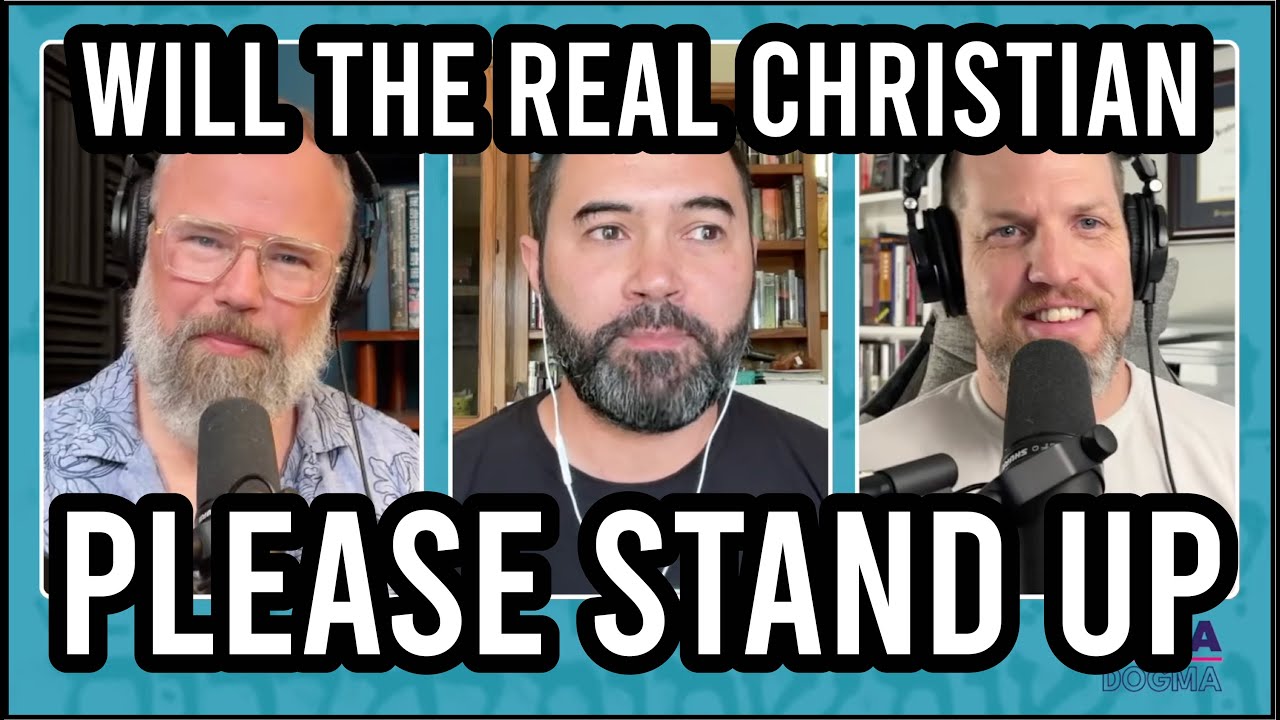
The Transcript
Can you talk about what actually makes a true Christian versus a fake Christian like me? I think it has… I mean, political power is part of it, but I would specify it specifically in terms of money. I think it’s about… I think it’s about money. Hey, everybody, I’m Dan McClellan. And I’m Dan Beecher. And you are listening to the Data Over Dogma podcast where we increase public access to the academic study of the Bible and religion and… com- combat, combat, combat the spread of misinformation about the same. As long as our locution is where it needs to be, which today it obviously is not. How are things, Dan? Man, we’re off to a good start. Off to a strong, solid start to our show, which is good. Tense podcasters would just start over. But, but, but fun podcasters will just leave it in and get… and keep rolling. Yeah, I’m excited. We got, we, we… we have a really interesting discussion today. We’re gonna be finally, finally getting to the, to, to the answer to the question who is a real question… real Christian, which I think I… and now I can’t talk. So we’re, we’re all in the same boat. Why don’t you introduce our guest before we just, like, run ourselves into a, into a ditch? Please help us, David. Today we’re going to be talking with my friend David Congdon, who is the author of a new book, Who Is a True Christian? Contesting Religious Identity in American Culture. Good grief… “Good Grief” is not a part of the subtitle here. And David is the senior editor at the University Press of Kansas and also adjuncts at McCormick Theological Seminary and Dubuque Theological Seminary. David, welcome to the show. Thank you so much for joining us. Thank you for having me. Yeah, great to be here. If we can actually get any words out, this is going to be a fun conversation. David, the, the book Who Is a True Christian? It feels, it feels like now’s the time for this book. I’m, I’m really glad that it’s, that it’s come out because I think that especially here in the United States, this is, this is what’s being screamed on every, you know, if you look at any Dan McClellan comment section or whatever, you’re going to find people safeguarding with all their might, mind and strength their idea of who counts in Christianity and who doesn’t count in Christianity. But I think that you will say that this is not a new phenomenon. I mean, the timing is really, you know, helpful for me. I think, as Dan will… well, the other Dan will attest, books take a long time to gestate and form. You don’t really have much control over when a book comes out. And so I began this book several years ago, thought it would have been out a couple years earlier than this year, but rather happy that it happened to come out in an election year. Did not anticipate having a mainline Lutheran as a VP candidate who aroused a lot of true Christian claims. You know, these things are all entirely out of my control, but it’s, the timing has been quite, quite helpful. Yeah, I really, I like the quote you start off with. You’re talking about Trump and the election from 2020. You begin with Pastor John MacArthur’s statement to Donald Trump: “Any real true believer is going to be on your side in this election.” So we’re, we’re not dancing around the issue at all, but, but aiming directly at the fact that who is and isn’t a real Christian is not just kind of an academic exercise or something for apologists to bicker about on social media. This is something that is influencing the election of the most powerful figure in geopolitics today. So this is a question that has come to the forefront of, of public discourse. Well, kinda. I think a lot of it is operating under the, under the surface, in between the lines. But I think this book is helpfully bringing it to the surface so we can actually talk about it openly, which again, folks in my comments section are, are usually not. Not… they don’t want to see this talked about openly, at least in a way that they are not in complete and total control of. But as, as Dan mentioned, this is not the first time or this is not the only time this has been an issue. And I think your book, interestingly enough, starts off by pointing out that this is the… the origins of this discussion have a particular historical and social kind of contingency. And can you talk a little bit about where this question comes from and why it’s important to the, the way the question is being discussed today? Yeah, I mean, that’s right. I certainly, when I began this book, I, you know, I was focused on situations happening in 2016 when I first started to kind of think about this project. And as I dug into it deeper, I began to have to push it further and further back in order to make sense of how we got here. And the way that my book structures it, I, I frame it in terms of modernity, you know, the modern period, so to speak. And I do think that, you know, modernity. Can you just define the modern period, not just because— Just because that’s a whole other podcast. People might think you’re talking about, you know, from, from the, the 20-teens on or whatever. But I don’t. We need a… who is a true modern, I guess, to really tackle that one. I’m going to roughly use the Reformation or, you know, 1492 as a broad kind of marker point. But, you know, I think that what we see in modernity is a challenge to two main authority structures. You have institutional authority and you have ideological authority. So, you know, by institutional authority, I’m referring to the fact that say, the Pope and the Emperor are presupposed to be authoritative, that those institutions are assumed to be… to have control over society. But then on the ideological side, you have ideas about doctrine, about creeds, about beliefs being normative and challenges to those norms arising. And one of the things I had to wrestle with is I encounter people who are progressive or left Christians who would reject the institutional authority, but strongly affirm the ideological authority of traditional doctrines and beliefs. And so you have this kind of two-pronged crisis of identity in Christianity and modernity. And they’re not always in sync. Oftentimes they are, but they can be. Separate, those two categories. Interestingly, throughout your book they keep coming up and they, they have different names you’ve called—you call them sort of religion versus theology or rules versus beliefs or authoritarianism versus orthodoxy, like they keep… but those ideas are like sort of the… a thread throughout your book and throughout the sort of, as you say, the history of this question. So it’s not so… so like talk a little bit about, about each of those categories, each of those ideas as, as how they, how they affect or, or… and who’s using those ideas differently when asking the question of what is true Christianity or who is a real Christian? You know, it’s… they’re not always like consciously or consistently using this terminology. So in some ways I’m trying to impose a framework to make sense of this morass of, of norm-claiming, right, or authority-claiming. It’s… it’s messy, right? To say the least. I do think that I use a quote in the book from Peter Harrison, the historian who has a nice statement about how the shift in modernity is a shift from “salvation belongs to the true church” to “salvation is from true belief,” the right belief, and that shift. So you do see a shift from more institutional claims to more ideological claims happening in the modern period, as authority structures are less tangible, less salient to most people’s lives. But I would say, language of rule and canon and those kinds of languages are certainly more on the institutional side. They tend to fall on structures and institutions that are setting out those rules and norms. Things like orthodoxy, though, are much more… they’re a little flimsier in terms of being able to identify exactly what orthodoxy means for each particular person. This project I didn’t begin to set out as a critique of orthodoxy. I eventually arrived there. By the time I finished this book, I have a whole chapter critiquing the concept of orthodoxy as the climax of my study. But, and when I say, when we say orthodoxy—sorry, just to, just to clarify, we’re talking about sort of a, a set of, of, of theological mandates or, or beliefs that, that are, that are required. Is it… would, would that be… I think that’s a fair way. Yeah. I think nowadays that’s sort of what orthodoxy means for most people. It’s just simply a set of beliefs or doctrines that is accepted as true, but, but specifically as normative for a community of faith. Okay, sorry to interrupt. So go on with what you were saying. Well, I mean, it’s… I think you have to sort of parse out in different, different situations what people mean by these terms, you know, so it… there’s a certain flexibility and fuzziness around this, these language of norms and rules and doctrines. I think that fuzziness is, is for some people, very intentional because it allows them to maneuver authority structures to meet the needs of their particular moment and their community. Right. Which of course, is not the case. It never has been the case. But, but that, that association of Orthodoxy with permanence, with continuity, lends it a certain gravitas and significance and authority for people’s lives that you can use for purposes of structuring power and, and negotiating people’s lives and how communities are going to operate. I, I think that’s such a, such a kind of universal fiction that, that an awful lot of Christians use in that structuring of power and values and boundaries. There’s so many things that are eternal and immutable and unchanging that are, once you actually look at them with a critical eye, are never the same. They’re always different. And, and just the idea that orthodoxy is what determines the essence. And you talk for quite a bit about the essence of Christianity. That’s something that has only existed for the recent, you know, the last quarter of the period of Christianity’s existence. For the first 75% of Christianity’s existence, there was an authority structure that spoke with ultimate authority, and that was. That was the. That was it. And then come the Reformation and. And everything changes. And, And a big part of that was actually deconstructing that authority and democratizing it to some degree, which removed that. That essence that got to make the decisions. And now we’re. Everybody’s on a search to try to. I don’t know if they’re trying to achieve that authority without the. The actual structure, because. And particularly with. Within evangelicalism, which is the loudest voice. And at least in America in this discourse, you know, it’s. It’s. It’s quite spread out and it’s quite decentralized, and I think they value that. But at the same time, they. They still want to try to be in charge of what Christianity is allowed to be. I mean, I think that’s partly what’s interesting about the new kind of surge in interest in Christian nationalism and integralism and those authoritarian structures is, you know, you see these Protestants and especially evangelicals sort of pining for an institutional authority that hasn’t existed for hundreds of years. They got rid of it. They got rid of it. Precisely. And it will never come back. There’s no way to recover that. And yet they are actively forming coalitions to attempt or at least to claim to achieve that authority. You think Trump is the messiah of this authoritarianism? Is this a way for them to achieve a degree. Degree of authority that is otherwise beyond the grasp of evangelical Christianity in America? I think in as many ways he is. I think that’s partly because Trump is such a raw lust for power that he is. He is infinitely moldable to the ideological needs of whoever is willing to give him power. Right. And that’s really attractive for a community that wants to gain power and legitimacy in society, to gain more control. They just need somebody who’s going to bulldoze their way into positions of power and doesn’t really care about institutional norms or any of those other moral issues, is willing to give them the power if he’ll put them in charge. Yeah. Even if it means totally obliterating all of the. Their standards and their, their mores they have always asserted are of prime importance. And then, you know, once you get to the Renaissance, the Reformation, the Enlightenment. You have, and you start to try to. A big project within European imperialism was, was categorizing everything, categorizing the whole world and all the people within it, and hierarchizing the world and everybody within it as well. And Aristotle, the ghost of Aristotle haunts an awful lot of what’s going on here. But I want to get back to the. This idea of the essence of Christianity, this essentialism, this notion that we can reduce things to necessary and sufficient features that allow us to. To define and encapsulate and control things. Can you talk about what you found fascinating about this search for the essence of Christianity? Yeah, the essence is a term that of course, it’s sort of fallen out of favor for obvious reasons for a lot of people today. But it was the banner under which, quote, unquote, liberal Christianity emerged in that kind of post-Enlightenment period. And many of those early liberals were very mystical in their orientation. They wanted to attain some divine essence, some divine purity that was beyond the violence and degradation of history. And so there’s that quest for purity, that quest for eternity, that it’s in many ways the liberals were the ones who really launched it. But then of course, the conservatives took it over in their own way. Yeah, that was an interesting one of one of your chapters, I believe, started with a quote that said that evangelicals are the new liberals. Right. And you know, obviously they ain’t in a lot of ways, but in this way they like in this sort of search for an essential quality, a sort of boiling down of, or maybe just a boundary, a boundary for who gets to call themselves Christianity. They sort of, they kind of took over that, that quest. Well, that’s what’s really been fascinating for me for the last 50 years or so. You see this odd role reversal within American Christianity in particular, where I see a lot of mainline Protestants, traditional liberal Protestants, rediscover a strong interest in tradition, in doctrine, in orthodoxy. On the flip side, you have the quote, unquote, conservative evangelical wing of American Protestantism, American Christianity, while they also are sort of on this quest for historic Christianity and all that. They are quite willing to rethink and redefine Christianity in rather radical ways to kind of fit their political agenda. Right. And so they’re proposing all kinds of new statements, you know, Nashville Statement and whatever it might be to, you know, provide a new creed for Christianity today. It’s an interesting phenomenon, I think. Yeah. And a line which gives us folks like Joel Webbon, who is trying to overturn everything that makes this world worth living in. It is. So one of the things that I found interesting about your book when you were discussing sort of the history of this quest and you call this, I think at one point you said that all of Christianity since the Reformation has been questing, has been this sort of quest to figure out what the heck Christianity actually is. But you’ve sort of pointed to a few moments in history that were like sort of pivotal moments just in world history. So you at one point you pinpointed World War II and you talked about C. S. Lewis and contrasted his quest for an essence of Christianity with a German whose name I’ve forgotten now. Rudolf Bultmann. Bultmann. Okay, so talk a little bit about their quests. Well, World War II is interesting for a number of reasons, but I think in general, kind of global critical moments where, you know, broad challenges to the status quo, challenges to institutions. Right. I mean, in many ways the First World War was that for Europe. Right. That was a crumbling of institutions. So we see like, you know, Weimar Republic and eventually Nazi Germany arise out of the ashes of that war. Right. And so, but I think for North America in particular, the Second World War is an especially pivotal moment. You see a lot of institutions form in the wake of that, the postwar period. So, but in terms of C. S. Lewis and Rudolf Bultmann, I like that kind of contrast because they’re both writing at the exact same time. They’re writing in the context of a war in the early 40s in which both of them are attempting to articulate what Christianity is today. Bultmann, who I did a lot of work on earlier in my career, is very famous for his what’s called demythologizing of Christianity. He got put up to heresy trials as a result of that. And you know, when he went on a tour in the US in the 50s, when he was introduced at places like Princeton Seminary, he was introduced as this great heretic. And so, the president of Princeton Seminary said, “You know, we still have things to learn from heretics,” you know. As a contribution to what is really a liberal Protestant trajectory in terms of trying to formulate a relevant and convincing account of Christianity for the modern period. Do you think you could come up with a, this may be unfair of me to ask, but a sort of a summary, a brief summation of C. S. Lewis’s ideas versus Bultmann’s ideas? Yeah, sure. I mean, so I, you know, Lewis. So I categorize in my book three different types of, of the Christian essence or Christian rule. You have a doctrinal type, and you have a kind of a cultural or, you know, experiential type, and then you have a kind of a practical or political type. And I sort of trace the history in those terms. Lewis is a classic doctrinal type of Christian. He, he thinks Christianity simply is a set of doctrines which includes a, you know, Trinity, incarnation and atonement. And then, and then also a little bit on, you know, moral beliefs, you know, practical living. Right. That’s. That’s his essence. It’s just a set of doctrines. And, and he talks repeatedly in his book about how, you know, he’s not trying to make this up. This is just the way it is. This is just what Christianity has always been. It’s been, it’s been these four things or whatever, you know, and if you don’t like it, that, that’s fine, you do your own thing. But this is what Christianity is. And he uses the analogy of dictionary words, which I know, Dan, you are a big fan of dictionary definitions, don’t. Want to talk about it. But he uses that analogy where words have a definition. This is what a word means. And he says Christianity is the same way. Christianity is the same. Simply means this, the set of doctrines. It’s funny because, you know, having been on a show with Dan for, for a little over a year now, and so I am not only suspicious of dictionary definitions now, but very suspicious when someone tells me they know exactly what Christianity might be. So absolutely immediately, Lewis, you. You’re. You’re on thin ice, buddy. So, so, so can, so what, where is Bultmann coming from? So that’s Lewis. I mean, Bultmann is on the very far opposite end of this in terms of, for him, he is, I would place him broadly in this kind of mystical, liberal tradition. And for him, the essence, or what he calls the kerygma, which is this Greek term, you know, for proclamation. And he uses the word kerygma in a really creative, unique way. It does represent what liberals previously had called the essence. And it is pre-linguistic, it’s pre-rational. It’s not something that can ever be put into definitive linguistic form. It doesn’t have a definition at all. It cannot have one. And. Right, that’s helpful, thanks. So, you know, he has this letter that Bultmann wrote to Heidegger actually, in the 20s or maybe, oh, no, maybe later than that. I forget it now. But he had written a letter to Heidegger where he said, the purpose of all of this is to be on this ongoing pursuit of trying to identify what the kerygma is, but you will never arrive, you will never get there. And so he holds it out as like this carrot that we can all, we’re striving to reach the kerygma, but it’s like it’s this transcendent eschatological reality that lies beyond our historical finite grasp. Christianity as a stationary bike in some ways. Right. Well, I, I think that is probably one of the more kind of honest approaches to what Christianity is, because it is whatever people say it is. And so recognizing that this is not something that we can actually nail down gets closer than the folks who suggest that, oh, we can nail it down because their nails and their, and whatever they’re nailing down are always just socially and historically contingent, just ideologies. And this is something that I think is, I think is fascinating about this, this search for an essence is, it’s always an attempt to shed whatever cultural trappings you don’t like to say. I forget exactly what it. What the title was, but C.S. Lewis in 1958 was like, yeah, there’s contradiction, there’s wickedness, there’s evil going on. There are things in the Psalms that are. That are bad. And this person pointed out inerrancy was not the battleground, was not part of the essence of Christianity at, in 1958. So Lewis could get away with that and nobody cared. Now, however, inerrancy is, is at the heart of a lot of what’s going on there. And even as people, not just, you know, fundamentalists and evangelicals, but, but folks like Jordan Peterson and, and others who want to latch on to Lewis as, as some kind of validator of Christianity, as, as the great hope for humanity, appeal to Lewis and are just like, we don’t care about that. We don’t. We’re going to ignore that part. Lewis is, I mean, part of a British tradition. Of course, it never had an interest in inerrancy and still doesn’t. You know, British evangelicals always like to complain about the American evangelicals for this very reason. What was. Yeah, James Barr wrote a book on fundamentalism, right, where he distinguished British and American evangelicalism and was like, and it’s. Oh, it’s a nonsense. Don’t know what’s wrong with those idiots. I mean, the thing with scripture is fascinating too, because I do think the inerrancy debates are, I mean, while they still happen, it is largely a thing of the past, in my opinion. I mean, we do. I mean, the inerrancy wars were big in the 70s, 80s, and then especially into, you know, 90s. But one of the things I’ve noticed, I do think this is increasingly the case since 2000 or early 2000s, is that a lot of the evangelicals, you know, they’ll still, of course, appeal to inerrancy, appeal to the Bible, of course, but there isn’t the same sense that inerrancy or scripture is going to be the answer that will address the problems. I think there was a sort of naive assumption that if we just get people on board with Christianity, we do enough evangelistic crusades and all the rest, we get people converted, then they’ll just follow our social and moral political beliefs. Because the Bible is just so obvious, Right. Once you accept the Bible’s authority, the rest will follow. I happen to know of a podcast that might confuse that. That might be tricky. It might make that a tricky. It might, yes. Yeah, right. And I think that became increasingly apparent to them that that was just never going to be the case, that that wasn’t going to happen. And I do think there’s been a rhetorical shift away from inerrancy and the Bible as being the focal point to other, you know, other. Other. Other areas. You know, I think that’s partly why we see this interest in Christian nationalism is because they. It’s. It’s not going to be the Bible that’s going to be the answer. You gotta, you gotta, gotta force the institutions, the political institutions, right. To force their. That way of life on the people because they’re not going to adhere to it just by simply being Christian so. That the one authority failed. So we’re. They’re like, all right, we’re going to try another authority structure. Right? Yeah, right. And this, you know, this, this sort of ties into one of the things that happens a lot in your book, which is when, when we’re discussing the modern question of. Of who is a true Christian, it does tend to centralize on certain political questions. It centralizes on the questions of abortion or the questions of, you know, other. Other questions. Other sort of societal questions rather than theological questions. Or it centralizes those societal questions around theological questions, which is sort of part like, you know, the evangelical. The. The rise of the power of the evangelical movement. The political power of the evangelical movement, which started sort of in the 70s 80s with especially centering around this question of abortion. I, I don’t. I thought I had a question. There was a question sort of formulating. I’m. I’m sure that. But like, talk a bit about. About how this is structuring itself and about how it, like what the landscape looks like now beyond. Well, maybe not beyond the Dan’s comment sections because that. It’s where I go first. I just. It’s very entertaining. Yeah, well, and I think there’s an interesting point to make here. That one of the reasons that prior to, like Falwell and Weyrich and these others, Christianity, there were an awful lot of Christians who were like, political power bad. The scriptures say we should not be searching for this. That is not Christianity, that is opposed to Christianity. And, and then we had these campaigns to galvanize a religious right that fundamentally had to do with the ability to keep black folks out of evangelical universities and folks and things like that. But now when on the other side of this, it seems to me we’re kind of getting the outcome of all of this where we’re now having people saying it doesn’t matter if Donald Trump is a rapist or an adulterer or any of these things because he’s going to give us the power and that’s what’s important. That’s quite a significant shift. So. Yeah, could you, could you talk a little bit about how things have changed since, since the 70s? Yeah. Well, I mean, to go back to the point about the doctrine issue, because you think what’s interesting about this shift is, I mean, doctrine is just no longer important to most people. It’s not relevant for most people’s lives. And I think everyone recognizes that, that there’s a general sense of acknowledgment that the doctrine exists. It’s there, but it’s largely faded from view. I think there’s a lot of, there’s some historical reasons for that. I think people will be surprised to hear that you say everybody recognizes this. I don’t think a lot of people do. I think, I think it’s true in people’s lives. But they, but if you asked them if the doctrine was important, I think many, most people would say it is, but it’s true. I think you’re right that it’s. Well, I think doctrine is a proxy now. Right. The doctrine is a proxy for other things. That is to say, you know, it’s not the doctrine itself, so to speak, that is what is so crucially important. It’s that it’s a stand in for a larger set of cultural, political, social values and norms. You know, so, you know, when, so even some, some of the folks you know who are on the left will talk about the importance of the Trinity, for example. Right. It. And certainly I do, I do believe that they’re sincere, that the doctrine of the Trinity is crucial to them. That’s fine. But it’s more than that. The Trinity is a stand in for a church and a set of a liturgy. Right. A liturgical community that is shaping our culture, shaping their culture, shaping their values. That whether you belong to that church or not is kind of reflected in how strongly you adhere to this doctrine. Right. And so the doctrine becomes a portal to a larger set of institutional social values. Well, it becomes an identity marker. Right. But I think its use as an identity marker usually takes over from its doctrinal significance. And because of the constant negotiation between our sacred past and our present and our future, those identity markers still have value, even if the content is no longer there. And now it just functions as a credibility enhancing display or something like that, or a means to the next end, which is now not doctrine, but power. Yeah. And I think that’s, I mean, the Religion is Make-Believe book, which you had a episode about, which I love. You know, it’s a really important and helpful book. It’s all about that. Right. It’s a group identity marker precisely for that reason. Yes. And I think on the flip side, you know, for, in terms of the story about evangelicals, I mean, evangelicals are a really interesting case because there you see the atrophy of doctrine really profoundly in many ways. I mean, you look at the contemporary non denominational evangelical church today, doctrine is not on their radar. I mean, it’s, it’s there maybe on their website, but that’s not what they’re, they’re preaching or promoting, you know, and, or to put another way, a traditional set of doctrines associated with creeds and councils and all the rest is not the focal point. What’s now is a new set of doctrines that has arisen that are being constructed in real time. You know, we’re seeing effectively a new creed being written right now, you know, by parachurch networks and activist organizations. That’s their creed. You know, it’s almost irrelevant what you believe about the incarnation, you know, what you believe about some of those traditional views about the Holy Spirit or whatever. That’s not the, that’s not the concern. Well, one of the things that has happened sort of, and especially in the American evangelical landscape is that the creed has become almost atomized to each individual church, each individual pastor. His flock has its own creed or her flock has their own creed. And it’s. And you know, every now and then you’ll see them get together for, you know, for whatever group and the infighting begins because they can’t even decide amongst themselves what’s, what’s, what’s correct and what isn’t. Yes. I mean, I would say, you know, some of the people who are really strongly, you know, adhering to ancient creeds, they’ll say, we don’t have creeds today. Do you have confessions or statements of faith? Right, they’ll try to make that distinction. Right. A proper creed requires an ecumenical council. You know, that’s the, the really hardcore traditionalists will strongly emphasize that. But yes, I think you’re exactly right. We have a plethora of statements of faith that we all are, you know, just assuming that that’s what our guiding principles are. So as, as Christianity becomes defined more by pluriformity than by consistency, what is driving the boundaries that are reified? What is driving what is acceptable variation within Christianity versus what puts one outside of Christianity? It sounds like political power is the target for, for most of the reduction of Christianity to necessary and sufficient features. So is it just whatever threatens political power? Is it more complex than that? Is it social? Is it. It doesn’t sound like it’s very doctrinal. Can you, can you talk about what actually makes a true Christian versus a, a fake Christian like me? I think it had. I mean, political power is part of it. But I would specify it specifically in terms of money. I think it’s about. I think it’s about money. Okay? And I, I use the example in the book about colleges. I use Wheaton College as an example. But you could use almost any Christian college or any Christian institution these days. You look at what threatens the organization, right? It’s threatening donors. It’s threatening, you know, enrollment. It’s threatening, you know, participation in their activities, their organization, subscriptions. You know, that’s. So it’s. It’s about money, right? And I do think that is the, the structuring principle, the criterion for defining the boundaries. Orthodoxy is a flexible category that by and large, for most Christian organizations doesn’t get used until somebody threatens a money base. You know, until somebody threatens that source. I want to. I want to share a brief story just to punctuate this. So I worked for just over a decade as a scripture translation supervisor for the LDS Church. And I would go occasionally to a conference that was called BT Bible Translation that usually took place just outside of Dallas. And it was overwhelmingly evangelical groups, a lot of them doing a lot of really good work around the world. And I was always trying to collaborate with folks, sometimes because I thought I could contribute, sometimes because I wanted something. For instance, there’s a Bible translation machine called Paratext. I was like, we could really do a lot with this machine. We could learn a lot from it. This could be helpful for us. And I would. And I had friends who were parts of organizations that were using it, and even that were parts of the Paratext organization itself. And it always came. We never were able to get any approval for this. And it always was the same reason. If our donors find out that a Mormon is doing this, they will. We will lose donors. And so I, I have seen that in, in real life, in even living color. So that, that makes an awful lot of sense and it also kind of cheapens the Christianity. But those institutional concerns, I think it’s fascinating that the institution ultimately is what is driving things. Even as the Reformation and the Enlightenment was all about deconstructing the institution. You’re right. I mean, what we have now are a plurality of institutions all vying for this marketplace, right? This free marketplace, so to speak. Not really, but anyway, that’s the idea that they’re all trying to, they’re trying to vie for, for donors for funding for support. And I, I think one of the things about the kind of the American experiment politically with the wall of separation between church and state is that it has forced churches to be marketing machines, right? In a way that an established church system, the church can rely on taxes coming to them to support their, their institution. So the institution is just, it’s in place, it’s stabilized by public funding. When you don’t have public funding for the churches or for anything, or anything, you know, this includes higher education, this includes whatever, right. You don’t have public funding to support it. You have to market yourself. You have to be this PR machine going out there hustling for those funds. And that means that everything is subordinate to that mission. You know, your, your statement of faith means nothing if it doesn’t get you that funding. If it doesn’t keep, you keep the lights on and keep going. So the kind of the capitalist neoliberal landscape of America today means that every church ultimately is subservient to the dictates of the market. That’s the reality. And this is why evangelical universities have to have statements of faith and why there are folks like Pete Enns and like others who get, they are shed from this because they know that that threatens the interests of donors, even though the, the donors may be operating on a more doctrinal level. Yes. Fundamentally, what is driving that engagement and that interaction is the institutional concerns for, for the money. Do you think this is why fundamentalist Christianity, evangelical Christianity stands so opposed to socialist approaches? Absolutely. Absolutely. Interesting. Oh, for sure. 100%. No, I mean, it’s, it’s, I mean, it’s, it’s all baked in there, right? It is, it does come down to that issue. I mean, and we all know this, we all know these organizations that if their funding base changed its beliefs and their values, they would change in a heartbeat. Right. You know, tomorrow they would change. You know, we saw this with the whole World Vision scandal. You know, with them trying to change their policies. Policy on employees. Fuller Seminary is going through it right now. I mean, Fuller Seminary is currently in the process of, of possibly changing their position on marriage. Exactly right. You know, and for those of you. Listening, I held up a copy of the book The Widening of God’s Mercy: Sexuality within the Biblical Story by Chris Hays and his dad, Richard Hays, which basically has this very influential evangelical scholar, Richard Hays, changing his mind about LGBTQIA inclusion within evangelical Christianity and making a biblical case for it. And I think Chris is at Fuller. He’s at Fuller. He’s a professor at Fuller. I mean, Richard Hays’s change of mind is of course, notable in itself, but Christopher Hays’s employment at Fuller is the bigger story, in my opinion, because that’s an institution that has fired faculty in the past for having this very position. And then being LGBTQ inclusive. Is that what you’re saying? Yeah. And Chris talks about the, the lay of the land at Fuller and at the beginning of the book, yeah, it. Does seem like that. Like, so a lot of these as, as society liberalizes or rather as society changes its, its position on questions like abortion, on questions like LGBTQ inclusion. So one of the, one of. And you can tell me if I’m wrong or right about this, but it feels like what. One of the things that happens is all of these institutions that had been traditionally non-inclusive and that, that non-inclusivity that then becomes part of their sort of, again, identity markers and stuff, and they, and you know, they dig in their heels, they, they sort of solidify and calcify, you know, recalcitrate into these things until they can’t take it anymore. And it feels like we might be reaching an inflection point or we might be heading toward an inflection point where society will no longer, you know, society at large, the view will, will overpower these, these institutions. Do you think, do you think that’s something that’s going to happen? For some of them? Yes. I think the problem, the challenge that we’re facing though, is that institutional Christianity is just simply dying across the board. And that just means that the writing is on the wall for most of these institutions, that they’re not going to recover something like it was. They’re bleeding members. So, it’s not currently in their best interest for most of them to change to a more affirming or progressive or more liberal position on a lot of these matters because there’s not a base of people clamoring to come back. That’s a good point. I mean, a lot of people have, because of their, you know, their affirmation of LGBTQ people, just as an example, they left the church because the church wouldn’t go with them into that realm. And so, yes, then when you say, “Oh, no, wait, look, here’s a church that’s following you where you’re going.” Yeah. They’re like, “No, I’ve already left that institution. I don’t need that anymore.” Yeah. I think, you know, I’m one of them. You know, that’s been my own trajectory, and I’m fine with that. I think a lot of churches, a lot of Christian institutions, probably, if they aren’t already, have to come to grips with the fact that they had a time and a place to serve their constituents and their audience, and that time is quickly coming to an end. And so I do think, you know, when I talk to a lot of mainline church leaders and people in denominations—I’ve been involved with PCUSA for a while. I’m not PCUSA, but I teach a lot of ministers, and they are very open about this. They recognize that they are here for a time to help these churches die. Well, wow, that is. That’s… It’s… That’s bleak. It’s bleak. But… But they are being trained to have their eyes open about this because that’s just the state of things. And so a lot of them go into these churches, these small churches that have maybe 20 members left, and they know that they’re on hospice care for that church. You know, it’d be three to five, 10 years maybe, and then they’re going to shutter those doors, and that’s their call. That’s what their ministry is. Yeah. I do feel like a lot of what we see, especially in the loudest of the big evangelicals, is a desperation. Like, you know, when we see these pastors and these large figures screaming about Christian nationalism, it feels like they’re fighting for their lives. They are. Yeah. Yeah. I mean, and I think—yeah, I’m sorry, go ahead. I interrupted you. No, no, go ahead. Well, I was just going to say it seems like there are folks who are digging in their heels. They see the writing on the wall, but rather than try to chart a new way forward, they’re just going to dig in their heels and double down on things. Which is what gives us the Joel Webbons and the Mark Driscolls and the folks who are just going to commit fully to a more radical identity marker so that they can try to reap, you know, just the fringes of society so that they have some kind of membership, some kind of income, and they don’t care if it means there are people wearing swastikas in their services. It seems like they’re—but that would be like, if they’re trying to reach the most radical and the most extreme just for the sake of the tithe. It sounds like that’s the last heartbeat of institutional Christianity, and that’s. And that’s beating true. It’s exactly what it has been the entire time about trying to structure power and values and boundaries in a way that serves their moneyed interests. And there’s a lot of money tied up. There’s a lot of stuff. And so it sounds like they’re just trying to find out how to appeal to the most checkbooks right now. Absolutely. I mean, that is exactly what’s going on. And I think we’re also seeing what Christianity means for that group changing to. Basically, it’s indistinguishable from a political party; it’s indistinguishable from a political organization. And those words might very well in the very near future be synonymous. That when you say Christianity in the US context, it just means Republican Party, far right. You know, that’s probably inevitably where things are headed. Yeah. Which strikes me as part of kind of a much more, much larger scale macro trajectory, because you start with the Reformation. The Renaissance. The Reformation and the Enlightenment is what kind of created the dichotomy of the secular and the sacred, of the political and the religious. And people get upset about the intersection of the two. And it’s like their distinction is artificial to begin with, and we’ve been trying to keep them apart, but this is to me, it seems like a pretty natural reconvergence now because we’ve reified the distinction and we have created two separate categories. It’s more of a marriage now rather than a kind of Borgian becoming part. Assimilation. Yeah, rather than an assimilation now. Now it’s just a marriage, a union of two distinct things. But it seems almost like, you know, the gravitational pull brought them right back together again and it’s almost like the — yeah, the moon crashing back into the earth after having been created by some other — Ejected from it. Yeah, I mean, it’s. Yeah. The history of that sacred secular distinction is interesting in itself. I mean, I would — I might actually rephrase it a little bit differently in the sense that there’s, you know, the church, the medieval church erected that distinction on within its own terms, right, as a different — Yeah, like these are — these are the — this is the — the police department of the church, and this is the other part of the church. And — Yeah, yeah. And so, like, when the institution falls down, right, or gets deconstructed or, you know, you have to change how those terms function. It’s no longer a different set of offices in society; now it becomes this more — you know, these, this different set of values or different set of norms that are operating, but they’ve always been in this very odd dialectical tangle where how you draw that distinction is reflective of the agenda you have in that moment. We — we talked in a previous show about the development of the concept of religion and how in the medieval, early medieval period, a, you had religious and secular monastic orders. And so that was kind of the original distinction of exactly — of the two that then becomes what is fought against in the Reformation. And so it’s when — when you pull back and take a look at the whole macro history, it’s fascinating to see how, again, we are always in negotiation with what has come before and we can’t really escape. It would be nice if we could just take a — you know, if we had the sacred timeline and we could just kind of cut it off and start a new one and not have to deal with what came before. But that’s not how the world works. And so what — what do you see beyond? Do you — have you looked beyond what happens when — when pastors just become party bosses? Which, which is something that, you know, we have here in Utah? I mean, sure, we’ve got most of our legislators are — It’s a theocracy. Yeah. Yeah. So have you — have you considered what — what happens after that? Well, I mean, I — I’ve thought about it, but, you know, it’s not going to be Nostradamus here to anticipate the future. But I, you know, it’s hard to say. I mean, there’s always going to be this quest for something spiritual, something meaningful, something beyond ourselves. What that looks like is — is in flux. And I have — hard to say. Yeah, I — I do think that, I think we’re, you know, there’s a sense in which I — I think the churches and religions more broadly perhaps are going to be — have to — have to reconsider their distinctions from each other. I think the, in the near term future, I do think that denominations will need to align and join together and kind of coalesce. That’s going to be a survival strategy for a while. But I think that that possibly might lead to maybe breaking down the walls regarding what makes one religion distinct from another religion and perhaps finding commonality and solidarity beyond — beyond doctrine and beyond liturgy as, as, you know, shared human concerns, you know, that might be a source of future potential. Well, that’s part of what your book concludes with is this idea of, you know, you, you do take a stab at a, at a, a prescriptivist approach to what should probably happen in the question of what is a true Christian. And, and you bring up the word polydoxy as opposed to an orthodoxy. Talk just a little bit about what that looks like. Yeah. Polydoxy is a term that I came across originally in some theological writings from people like Catherine Keller and others, but they’re using it in a different way than I use it. I get the term from this Reform Jewish philosopher, Alvin Reines, who wrote this really obscure book called Polydoxy back in the 80s. And when I read it, it really blew my mind because what he’s doing is, he’s not giving an alternative theology. This is what people ought to believe. What he’s doing rather is setting up the conditions, the institutional conditions for, for a community, for a society that can embrace diversity and difference, that can have a plurality of beliefs and practices in which we can both embrace and respect that diversity. So polydoxy comes down to, for him at least, this idea of religious self-determination, that is that we should have this shared value, that each person has the ability to determine for themselves what religious values and beliefs they adhere to based on their own conscience, based on their own commitments, and that there should be an institutional structure that supports and respects that. So that’s the challenge here. So orthodoxy as he understands it, and I think he’s largely right here, that orthodoxy comes down to this notion that ultimately there’s an authority figure, this magisterial authority, who gets to say arbitrarily, this is what you all need to believe. This is what you all got to do. If you’re going to be part of this community, you have to subscribe to these tenets or else you’re out. And that authority figure can determine what that is at any given point in time. Effectively, polydoxy says, no, we’re not going to have that kind of hierarchical structure in which some patriarchal authority gets to determine what we all have to believe and do. We’re going to create a system in which we respect each person’s ability to determine for themselves what they believe. And then the challenge is figuring out what that looks like, figuring out what a community needs to be in order to make that possible. I think one of the things that, that removes, which is, I think one of the most salient features of the authority is, is the ability to police boundaries. What do boundaries look like in that people can come and go at will and you don’t really have a quick and easy way to determine who’s in and who’s out, apart from their own word, which, which removes an awful lot of power from, from the group, which is what, why most people today see that kind of thing as a threat. Very much so. Yeah, so that’s. Yeah, it does. It removes the boundary policing entirely. It’s really a community of consent. Right. That’s what it’s about. And I think if we learn anything about evangelicalism today, it doesn’t believe in consent. On so many different levels. Yes. Yeah. Back to the book of Acts
and the folks who had no, no poor among them. But make sure you do what we say or else God might kill you. Is, is, you know how that story ends. Yes. And that didn’t last for very long. So that, that need to, to police those boundaries is, is, is there even in what many people consider to be the purest manifestation of, of having no poor among us. And, and yeah, so that’s, ah, that’s, that’s troubling to think about. It is troubling. I mean, it’s there, it’s, it’s in some ways baked into the human condition to, to want to police those boundaries, to want to say somebody’s in, somebody’s out. And I get it, you know, I mean, it’s, that’s, that is a human tendency that we all have. Well, from the cognitive perspective of the cognitive science of religion, that is fundamentally what makes us human. That is why we exist as a species is, right, is prosocial markers and cues and things like that. So yeah, that does, that does undercut that. But, but at the same time those, those prosocial, those baked in prosocial tendencies are what also contribute to some of our greatest social ills and our geopolitical instability and stuff like that. So you know what? Maybe it’s time we move beyond human evolution. Right. Well, you know what, that is going to be an interesting discussion and I am going to make us have that discussion or at least part. You always do this, Dan. We’re gonna, we’re gonna do that for our patrons. So if you… for now, David, we’re going to thank you so much for joining us on the show. The book is Who Is a True Christian? It is, it is out now. Yes, it’s available. Yeah, it’s been out for a bit. Yeah. Good. And so I, you know, people can go and check that out. Is there anything else that you want to plug or anywhere that people can find you if they want more of you? You can still find me on the site formerly known as Twitter. I’m @dwcongdon there and I have a website, dwcongdon.com but otherwise, yeah, more books to come. Excellent, excellent. Thanks so much for joining us. If you want to hear the rest of our conversation with David, please feel free to become a patron over at patreon.com/dataoverdogma, where at the $10 a month level you can join in on the afterparty and hear even more interesting stuff. Other than that, thank you so much for joining us. If you want to contact us, you can reach us at contact@dataoverdogmapod.com and we’ll talk to you again next week. Bye everybody.