The Pastor Skeptic
with Jeremy Steele
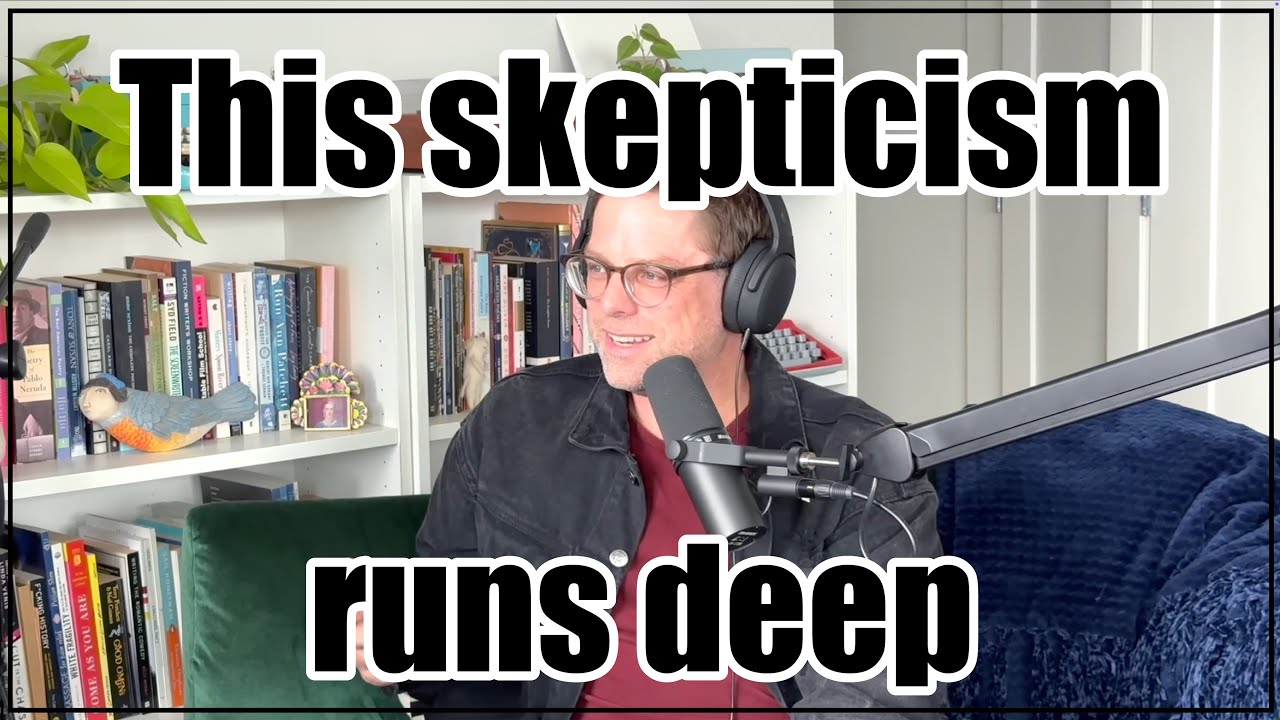
The Transcript
When a kid comes out, it’s a 15% chance that they’ll try to kill themselves. If they’re rejected on religious grounds by their family, that doubles. Why don’t we set the bar at only sharing beliefs that don’t make them want to kill themselves? Right. It’s a low bar, but I— It seems so great. I feel like we can clear it. Yeah. Right. Hey, everybody, I’m Dan McClellan. And I’m Dan Beecher. And you’re listening to the Data Over Dogma podcast, where we increase public access to the academic study of the Bible and religion, and we combat the spread of misinformation about the same. And you may not be able to hear it, but those of you watching this on YouTube will see that we’re in a slightly different setting. Yeah, this is a whole new configuration for us. We are all in the same room. We are here. You and I, Dan, are here together, and we have a special guest. Would you like to introduce our guest? Our guest is Jeremy. And I suppose I should have asked you at some point about your last name, but— Steele. Steele. No, I knew that. Okay. I’m sorry, I’m the worst with names. But Jeremy is on social media—on TikTok, on YouTube, on Instagram as well, right? Yeah. The thing that sticks in my head about your introduction of yourself in each video is that you are a deep skeptic. Yeah. And a pastor. Right. And I would like to hear more about what deep skeptic means to you and then introduce yourself a little more thoroughly for the kids. Yeah, for sure. Deep skeptic. So, I mean, there’s some people that are skeptical, just like, “I don’t know about that,” right? For me, what it means when I say I mean deep skeptic is that I just am not going to accept something until I have some solid data. And if I don’t have solid data, we’ll leave it open. Right. And I think when I say deep skeptic, I also mean that I’m never going to close down really anything I believe and say, “That’s it. It’s 100%. It’s the law,” whatever. I’m always open to new data. And the more data I amass about something, the less likely it is that I’m going to sort of let go of that. And specifically, we’re talking about, like, skeptical even of things like the question of whether or not there’s a God or any of those sorts of things, which is not the most traditional position for a pastor to take. You’re not wrong. And people regularly remind me of that online. Yeah, I’m sure they do. Because I, you know, I think the question about the existence of God, it’s a hard thing to—I mean, like, any data, like anything you get is just completely subjective. Yeah. Very circumstantial. And so like there are days when I’m like, yeah, I think God exists, but it’s all experiential. Like, it’s like you experience a sense of transcendence or whatever it is that people sort of want to tag to God or the universe or whatever they call it. But it always boils down to experience. Right. You can’t measure that yet. Yet. So I go back and forth. So, and that’s, I think for me there’s this really great book by a researcher named Dr. Lisa Miller. She’s at Columbia and I think she worked with Yale or Princeton. All the Ivy League schools are the same in my head. But she’s fancy. Yeah, she’s real fancy and super smart. And basically they were studying religion, religious beliefs, religious practices, and religious experience. And at the end of the day, it didn’t really matter which religion that they were studying. They all had an overall positive effect on people’s mental health, well-being, and all sorts of metrics for like a good life. Yeah. So like they had an easier ability to cope with stress, more sense of connection. And the other thing that was really interesting is like statistically deep religious experiences—and not the ones that people are traumatized and ruined by, but like deep religious experiences—had represented a statistically significant protective effect against recurrence of major depressive disorder. And when they were doing the fMRI scans and people were talking about reliving the religious belief moments, the same part of the brain that is stimulated by an SSRI was the one that was lighting up on the fMRI. So I say all that to say because of course, me being a pastor, I consider that role, at least for me, to be helping people find spiritual beliefs and practices that work for them, that help them become the best version of themselves, find a purpose greater than themselves, and maybe experience transcendence without necessarily. tying it to a specific tradition. Right. But making it more about the experience without the boundaries of a given community or faith tradition. Right. And that’s partially because of the population I work with too. Talk a little about that. Yeah. But I should say at the end of the day, if I die and God doesn’t exist, I feel like I’ve spent my life on something that has actually helped people, even if it turned out the whole enterprise of religion was a lie. So that’s how I, like, make peace with the—like, who knows about God? But the religious stuff might help people. Yeah. But the community that I work with, it sort of grows out of my TikTok and other social media platforms. It’s people that have been deeply hurt and traumatized by religion but are wanting to be a spiritual person, have spiritual beliefs and practices. And so almost all of them, the religious stream that traumatized them was Christianity. And so I like to say I’m a practitioner of Christianity—like, that’s what I’m trained in. I don’t like to call myself a Christian, but… And so can you—wait, can you sort of—can we dig into that a little bit, the distinction that you’re making there? Yeah, it’s—I live in D.C., okay? And enough said. I’m—I’m a—I’m not sure that that is enough. Right. I’m also part of the queer community. And when you say Christian, it means something—yeah, in both of those spaces. Something more than just like, “I’m a believer in Jesus,” or I, like, you know, “I follow a certain set of tenets.” It has a greater sort of sociological meaning. Yeah. And what it means does not describe me. Right, right. It almost rejects you. It is. I am in many ways the opposite of the kind of contemporary cultural definition that comes up in people’s minds when you say Christian, especially when it’s somebody that’s, like, not involved in Christianity. And so that’s not me. But as far as, like, a religious tradition and my experience, that’s what I know the most. That’s what I went to graduate school to study, and so I practice that. But, man, I don’t want you to think of me as part of the community with all of those people. You don’t feel in community with Mike Johnson? Definitely not. Yeah. In fact, like, oh, my God. When he talked about having a biblical worldview. And, like, if you want to know what he thinks, read the Bible. I’m like, “Have you read the Bible?” No. No, he has not. So, like, you’re—you’re really good with, like, you know, you know, just enough beating of a slave. Right, right. Just—just the right amount. The correct amount of beating; you don’t want to go past. Right. Yeah. So, yeah, I—that’s—and so I wish I had—I wish I had something that didn’t use the word “Christian,” really. But all the, like, stuff—like, I grew up in the evangelical Deep South in the 80s and 90s, and, like, “follower of Christ” or “Christ-follower”—all of it seems, like, cheesy and not—not it. That’s the best thing I’ve come up with. I’ve asked people on TikTok to help me out. Nobody’s got a better—nobody’s got something that feels like it resonates more with me. You put the “ish” in Christian. Almost got him on a spit take on that one. Yeah, I almost got the spit take. It’s like the—who was the politician, George Santos, that, like, he said his parents were Jewish and somebody confronted him and he’s like, “They’re not Jewish.” And he’s like, “I meant Jew-ish.” Yeah. Classic. Oh, my gosh. So—so talk to us about—because you are an ordained pastor. Yeah. Talk to us about your path from presumably very conservative Yeah. Christianity in the South to a, you know, queer-positive pastor Yeah. in D.C. Like, how— What did that road look like, man? You know, it’s interesting because, like, when I say I’m a deep skeptic, like, I’ve always been that, but I’m also old. And so when I grew up in that sort of evangelical Deep South, conservative religious culture, I—you only have access to the information that is around you or in the library. Wow. You know, bullshit. Are we allowed to cuss on this podcast? You are. Okay. Like, and. And so, like, the pseudoscience stuff. And so, like, I would receive this stuff and I would read it, and I would, you know, believe it until I got a little bit further along. And there were some people that would push back against it. Right. And so that it took a long time, really, to start to unwind a lot of that, because I had all of this data that I’ve been given from what I was told was reputable sources. It wasn’t. Right. And the other thing, growing up as somebody who’s not straight in that culture is that it really wasn’t an option to claim an identity other than straight cisgender. You know, all of that. Right. Anything outside of that norm was a temptation, was something you were struggling with, and that. That gets deep. Right. Oh, I mean, like, I’ll never. I’ll never forget this is when I was in high school, there was this woman. We’ll call her Pam. Okay. Okay, that sounds right. And Ms. Pam had a prayer gathering at her house for high school students. But it was, like. It was very charismatic. Right. It was probably the gayest thing I have ever been a part of, because we would come in, she would put on Vineyard music, and we would have tambourines and streamers. We would dance around and. And people would fall out and speak in tongues. And there was this guy there that was there every week, like, me, like, every time. And then all of a sudden, he wasn’t there for a couple weeks. And I asked Ms. Jan or Ms. Pam, I said, Ms. Pam, what happened to John? And she, like, looked around like, did anybody hear him ask that? Pulls me into the kitchen. And she was like, well, a couple of weeks ago, John confessed to me that he was struggling with homosexuality. So. And then she left. So. And I was like. So, like, the, like, evangelical CIA came and got him. Like, it’s not clear. What was clear, though, is that that was something that was so bad that it meant that you couldn’t be part of the community anymore. Right. And either you had to be that. Your client’s confidentiality, either. Right. Just sharing this with. Come on, Pam. I know. Just go. Sharing that and that either you had to. You should be so ashamed that you should never show your face again or that you were not welcome. And I had been in the church world enough to know both of those things. He didn’t say, I am a practicing homosexual. He said, I’m struggling with this. And that in and of itself, she considered to be sinful or. Yeah, well, I mean, I don’t know, because she said so. Like, I was supposed to know. And as a high schooler, you know, like, I made up all of this stuff. So we murdered him. Right. So you will never see him again. And I actually. I did never see him again again. We didn’t. We went to different schools and. And so, you know. But that kind of messaging, and it’s not. It’s not just the. The like, actual homophobic rhetoric. It’s the way it’s enforced, the way it’s. You internalize that. Yeah. This internalized homophobia. And you go years and decades with this idea that, like, oh, wow, this is. This is a problem that I like, oh, if I stare at somebody of the same gender, I’ve got to stop and I’ve got to stare at somebody of a different gender for the same amount of time to, like. Because then I then say, somebody caught. You, and then they can be like, oh, okay, oh. Because a negative plus a positive. Right. Cancel each other out. Yeah. And so even long after I was. Years after I was. I sort of made this transition, and what really helped me made theological transition was going to a seminary that was really a kind of Wesleyan Evangelical Seminary. They gave me the tools to, like, the real tools to study stuff. And I was like, oh, oh. Everything you’ve been saying so far is bullshit. Cool. But even after I had made that transition and in my theology and all of that, I still had this internalized. I guess part of my question is when you are, you know, when you’ve been part of a community that has associated itself so strongly with. This is the Christian position. Right, Right. And you’ve been rejected, or at least a part of you that’s sort of integral to who you are has been so roundly rejected by that in the name of this Christianity. Right, Right. What did it feel like to then pursue pastorhood or to go to seminary with that hanging over it? Everything. And see, this is the interesting thing. Like, that internalized homophobia and internal evangelical dogmatism. You don’t. Until. Until you do, you just feel like, I don’t know, my friend has the sin of gossip, and they’re dealing with that. I have this other sin, and I’m dealing with that. And it’s. It’s not like your identity is being rejected. Okay? Right. It’s that, like, oh, I have this thing, this problem. And, like. And as now when it starts to break open, then you are feeling that. But for me, that was after seminary. Okay. And, you know, and I had a. You know, I went to some camp where, in the Deep South, where, when I was a teenager, lots of manipulation, lots of, like, you know, altar call stuff, and decided when I was in the sixth grade I was going to be a pastor. And, like, never let go of that. And so it was. It was a foregone conclusion at some point that I was gonna go to seminary and do the thing. Well, and I’m sure you got, like, a lot of positive feedback. Yeah, for sure. You say, I’m gonna be a pastor, and everybody’s like, oh, yay. Jeremy’s gonna turn out great. Right. We’re gonna be so proud, proud. And now they all think I’m going to hell. Yeah, well, and I think your story raises something interesting. A lot of folks, like, I don’t compute for a lot of folks, right. People who have grown up Christian and you, you pointed to something that is central to the perseverance of, of Christian traditions, is that when someone is raised within that framework and that is the foundation of their identity and that is the lens through which they know and experience and see the world throughout their entire childhood, and it’s all they know, that’s not something that you can just flip a switch and it goes away. Like, even if you decide, okay, this is me, I’m not changing, I’m not going to feel bad about this anymore, your worldview is still built, structured upon that, and so it influences you for the rest of your life. And I think that is what leads a lot of people to look at me and be like, well, he’s just lying about something, because there’s no way on earth that this all computes. But I came into religion as an adult, as a 20 year old, and brought my rather secular upbringing because I grew up in Gaithersburg. Yeah, I went to Travilla Elementary School, which is, you know, we could, we took field trips down to, well, over to Antietam, down to The Mall and to the, all the museums and everything into the Potomac River that I thought was the Pawtomac for the longest time. But, but like I was definitely a Southern pronunciation, that word, the Pawtomac. Well, I think the first time I saw it was like in elementary school and there was like a worksheet and we were learning about Indigenous peoples and it was like the Potomac Tribe. I was like, oh, that makes sense. I didn’t recognize this as the name of the river that was down the street. Right. I was like, the Potomac Tribe. That sounds very, that sounds very Indigenous. But I was raised to believe in evolution and raised to believe in all this stuff. And my education was very different. And I brought all that with me into the church. And what I’ve told people is no one ever tried to disabuse me of any of that as an adult who was, who could present as fairly well informed and fairly intelligent. I guess, I don’t know, they just didn’t think it was worth it. Or maybe they were intimidated by the prospect of trying to get me to return cognitively to primary school so that I could be indoctrinated and conditioned to believe all these things. Right. Very juvenile perspectives about what faith can be, what a religious identity is, and what sin and all that kind of stuff is as well. Yeah. And I think that’s, for me, really, the core piece of me was, like, always questioning. Right. And, you know, finding things that, like, didn’t seem right and then asking the questions, getting answers. And eventually those answers, the more developed my brain became, the less satisfying those answers were. Yeah. And then the further I got in school, the more I was like, no, science, I really believe this. This is, like, this is testable. This is repeatable. Right. And there was this limbo phase with figuring out, like, what does that mean about the Bible and all that kind of stuff. But for me, like, and this is for good or for bad, you know, when I don’t have an answer, I’m just like, kind of at some point just leave that. And, yeah, I’ll just watch some Dan McClellan videos at some point. I found a phrase that I started using in graduate school that I love is suspend judgment. Yes. Yeah. It’s like, well, we can’t really know for sure. I’m just going to suspend judgment and move along with my life. I don’t have to resolve this right now, particularly when it’s something that no one has ever been able to resolve. Well, it’s such an important thing that we don’t always get in society. We don’t always get taught that, like, saying I don’t know. Yes. Is such a positive, like, strong position to take. Whereas, but we, I think there’s this sense that there’s a weakness in I don’t know, or that there’s somehow a shame in I don’t know. Well, I think part of the, a lot of the Christian worldview is that the answers are all out there and that they’re all there for the taking and that everything does have an answer. If you’re proclaiming objective, absolute truth. And people are like, well, tell me about this moral quandary. And they’re like, well, now I’ve committed to having an answer. I need to have one. Yeah. Over towards the end of December, near the solstice, I did a couple of, like, darkest night moments on TikTok Live and where I just said, like, just name what’s hard. Like, the holidays are not always happy. And in fact, the, like, pressure to feel and act happy can make the sadness worse. And so it was intense, I’ll be honest. Like, it was thousands of people and they’re just like. It was scrolling by faster than I could answer them. But there was a couple of times where somebody would say, like, you know, I lost both my kids in a car wreck, you know, earlier this year, and how could God do that to me? And, you know, all this kind of stuff and, like, how could God be loving and all of that. And like, I remember saying, like, I have no idea, but that is horrible. It shouldn’t happen. And the, like, feeling that you have that there’s something fundamentally flawed about the universe because that kind of stuff can happen. I think that’s right. And I can just be there with you and hold space for it. And it was interesting. I cause like, I literally had, like, there’s no answer to that. Yeah. And when the couple of times that that happened, the, like, I don’t know answer, people were like, oh, shit. I mean, that’s what I was looking for. That’s. I wasn’t looking for an answer. Like. Like that. Yeah. I think that the. It becomes almost problematic. Yeah. When people, you know, I’ve been to funerals where because of the religious construct of the funeral, people weren’t allowed to mourn. Yeah. Yeah. Like, they, like it was seen as a. As a. As a failure of faith to mourn the passing of a person who was supposedly now in a better place. So why would you mourn that? And it’s, It’s. It. It doesn’t acknowledge the human moment that’s happening. Yeah. I think it’s something that. I mean, how many couples, how many wives have had to try to. To help their husbands understand that they don’t need to be fixed, they just need somebody to cry with them or to be there for them. And so that’s why. To commit the sin of empathy, one of the. The eighth deadly sin that. That scene was cut out of Seven. And they had to change the title of the film, which cost them a lot of money. But yeah. Anyway, the. And. And there’s a. There’s an explanation for this, because an awful lot of Christianity is. Is built on having right belief. That’s what orthodoxy is. And so there’s also this presupposition that turns out to be entirely wrong. We can test it and show that behavior is not directly. Does not flow directly downstream from belief. But that is a very, very common connection that is made. And this actually has, like, evolutionary pretty deep roots, that if you’re a part of a community, communities have certain standards, certain beliefs, certain mores, and these exist so that you can put on display your fidelity to the group’s standards to others. So we live in communities that are large enough that pretty much everybody can expect to run into people on a fairly regular basis that they don’t know and have to even rely on them for whatever they need to get done. And you need mechanisms to be able to know, I can trust this person, or I can’t trust this person. I need to have a duel with this person, whatever. And religion, what we label religion is a very efficient and effective means of doing that with a lot of the rituals and things that we do. But this results in a lot of beliefs becoming costly signaling. So to go to a funeral and say, I’m not sad, I’m happy, because they’re in a better place, that is a way. And deep down, that’s an inevitable human reaction. You can’t avoid that. But that you hide it, you incur that cost by performing that faith, because that shows everybody else. No, I get it. I believe it. I believe what we’re supposed to believe. And because if we believe what we’re supposed to believe, we will behave a certain way. I’m willing to behave that way. And they’re hard to fake. Signals of sincere belief in the group’s standards. And that kind of stuff’s been tested for decades. Yeah, I had this conversation with the rabbi, and you’re going to tell me it’s wrong, probably, and it’s going to ruin everything. But he told me about the point in the Exodus story where Moses comes down, gathers everybody, reads the law, and then they respond. And he said that there’s this construction there of their response. It says in Hebrew, it says, like in an English translation of like, we will do what God has commanded us or whatever. But in the Hebrew, it says, and this is where you’re going to tell me I’m wrong. But it’s fine that they say all the Lord has said, we will do and we will hear, or we will do and we will understand. It’s like, do and hear. Right. Okay. You’re safe. Because Dan doesn’t have a. Dan doesn’t have any way of looking. In the Hebrew, because normally it’s hear and do. It’s the other way around. Right. But in the order of the words. And this is what he said, so we’ll see. So he said that it’s actually revealing something about how we, like, we experience belief that we don’t understand and then do. But it’s in the doing that we, like, form our beliefs in community. And that, like, there’s obviously an interplay between what we learn and what we do. But, like. And that, you know, even if you tell me it’s a lie, that has really formed a lot of what, the way I process things. And also, I’m a Wesleyan. I’m from this Wesleyan tradition where we have experience as part of this sort of belief formation process that they say was Wesley, but it was just totally made up by a scholar, which is fine. But. But, yeah, that. That whole idea of, like, do it, like, isn’t the doing that we believe. Yeah, that. That feels right to me with my experience of the world. And even in the LDS tradition, you have something very similar, that a testimony is. Is developed in the bearing of it. Oh, interesting. And so. And I think there’s. I think there are two sides to this, because on one, this. The kind of cynical side of me would say this is just a rationalization of people not being able to deny that you actually are performing this. Right, right. And they’re saying, okay, well, yeah, we’ll say that you’re performing it, but that’s how you develop. Like, the cynical side of me would be like, that’s just a rationalization. But at the same time, I think there is. There is truth to that because the performance is what develops the community. And so while there is a degree of performativeness, I think, to that kind of thing, if that is generating community and if that is generating connections and meaning and value and all that kind of thing, then I think there is truth to the fact that the community has developed and their faith is increased, and there’s this collective effervescence, to quote an outdated scholar, that makes it all meaningful and makes it all worth it. And so from an experiential point of view, I think there’s value to that. Absolutely. So, yeah, I really. After. After we stop recording. I’ve gotta. I’ve gotta know you’re gonna. I need you to look up. Look up. Look up the passages, because normally it is hear. And do. Right. No, for sure. Maybe we’ll do that in the, in the patrons after party. Oh, patrons only, definitely. So we’ll give people, our patrons, something to look forward to. And usually also shama is the verb for hear, but it’s not used to just mean passively hear. It means hearken. Something like hearken. It’s. It’s more like we will. We will, you know, absorb this and, and we will agree with it and that kind of stuff. Interesting. I wanted to get to just talking about whom you’re ministering to. Okay. And what. And, and, and because you’ve. You’ve mentioned that it is not a standard flock that you are shepherd of. Talk about, like, how it has come about and then. And who they tend to be and why you’re. Why. Why they’ve come to you, why they’ve. Come to me, who, hell knows. But this is beyond all content creators with large audiences. When people come and say, what is the secret? Nobody knows. I don’t know. I put shit out there and people watch it, and at some point I feel like they’ll still stop, but they haven’t. So. Yeah, I. So I was writing a marketing article and trying to tell nonprofits how to use TikTok. I was researching how to use TikTok, and I decided I was going to put out some content that was authentic to who I am, which is pastor who is not sure if God exists. Which is funny because I’ve said that in all the places I’ve ever worked and they didn’t ever fire me, actually. I just got set up on blind date with atheist nephews to talk to them. So I did that and I exposed corruption in the church, which is, I think, an important piece because to have a pastor name these things as, like, wrong and they shouldn’t have happened and where I was part of it earlier to confess that, like, yeah, yeah, I did that and I can’t believe it. And I suck as a Christian. So that’s an important piece for people to, I don’t know, see a person in this role say that. Well, it’s. Sadly, it’s not what we’re used to. Right. What we’re used to is hearing about corruption or, or, you know, some sort of sexual misconduct or whatever, and how the church and the people surrounding it and like, the, the higher ups covered it up and how they shuffled it away. So, like, to hear someone who is in the clergy willing to actually call it out as the horrible thing that it is and just. And to decry it. Right. Is unfortunately a little bit Rare. Yeah. And it’s a thing that, that my experience is that people who have been harmed in that way respond to it in a thank you. What’s the other option? Right, so like, you know, the idea that, like, the Bible says you should give 10% of your income, not. Not really there, but it’s used to, like, manipulate people into giving you money, giving you 10% of their Social Security check, when they can’t even pay for, you know, what they’ve got. And, you know, to name that as corrupt. And to. Then people are like, okay, this is interesting. Not know what. Or they’ll send you a DM and say, like, okay, yeah, I feel like I can trust that you won’t bullshit me here. Here’s the next question. So I do that. I did that. And then I did, like, progressive takes on the. What? Right, but it was written right there. Right, but what that does is it lets you look at, like, something deeper in those passages and find something and then say, okay, now that, that. That thing is something that I can say, you know, how do I. How does that help me be the best version of myself? So the idea is that, like, I try to do. I try to take scholars and convey their content in a way that pushes people towards being able to form their own spiritual beliefs. And then I actually talk about how you choose beliefs instead of inheriting them. And so I did that, and it just. There was all of these people that they were like, actually, this is really healing for me. This is an interesting question for me, because the concept of choosing beliefs, at very least on some level, beliefs kind of aren’t a choice, right? Like, I can’t choose to believe something like, you know, if you tell. If you. If you just say, hey, I’ll give you 100 bucks if you just believe that there’s a giant pickle in space for sure. I can’t, like, if I’m being honest, I can’t choose that. You choose beliefs based on the data that you’ve received. I. I guess my perspective would be that I receive a bunch of data and then my brain shuffles it around as best it can. And then, and then whatever, whatever comes out of that shuffle is what I believe. But I don’t know that I chose that. It just feels like I just. That’s just my summation of everything that I’ve been able to take in. Right. Yeah. So, yeah, no, I, I totally get that. And I’m not. I don’t think you’re wrong. What I talk about is that, like, people often have given someone else authority, chosen to give brother Johnny. Right. The like, role of telling them what is true and what to believe. And they have just adopted that belief system. And so really they’ve chosen beliefs either way. But ultimately the choice to have it outsourced and just inherit beliefs from either an external. Some sort of external source is the thing that causes people to, like, unravel. Yeah, well, there’s, and there’s a lot of research on this as well, because there’s a. There’s a big difference between closely held beliefs about the way the world works and what cognitive scientists of religion might label religious credences. Yeah, right. Because when you say, oh, I, I believe that, do you believe that, that Jesus did that or the other to this or that of the other person or whatever? They’re not. Whether or not that is actually a deeply held belief is kind of irrelevant. What is important is, are you willing to sign off on this? Right. And so are you willing to give your public assent, which is that turns that thing not so much into a belief as into a credence. It is a creed. Are you willing to sign off on the creed? Because we can’t really have, like, we can, you know, you’ve got a telescope over here. We can, we can look into space, we could see things, we can observe things and our intuitions. And the more critical thinking that we use and the more analytical thinking that we use, the more convinced we might be of actual truth claims. That’s a different kind of cognition than saying, I believe Jesus rose from the dead. Because that’s for sure. You’re really just saying, this identity is so important to me that I’m willing to sign off on this, this creed. They function in different ways, they change in different ways. Because like, when you have seen a ball drop, you don’t just one day wake up and be like, ah, gravity’s not for me anymore. Right, right. Like, you know, those things don’t really. They’re not revisable, but within religions or, you know, quasi religious communities. One day you might say, we cannot elect a president who cheats on his wife because then he’ll cheat on the country. And a few short decades later, you wake up and be like, suddenly I believe that we’re not electing a pastor, we’re electing a leader. And so I no longer believe that it is wrong to have a president who cheats on his wife. So those kinds of credences are revisable and they are revised constantly. Yeah, absolutely. Yeah. And that’s where, you know, so I think, like rewinding to this original path that we were on, out of all of that came this community of people that was looking for like a spiritual community, like a church. Most of them had experienced church and in some way had. There was an element of that that was positive for them. They were looking for that. But they could never go to a church. Right, right. Could never go back. That was not a thing. And because. Because Sister Pam is there. Sister Pam is there. And, and all in like the place where the trauma happened. Right. Is a trigger. It’s. And not just the one place, but all these places. And so, and so they started asking for a place to gather and we started Discord. And eventually it was sort of dubbed not church because it was like the stuff you wanted from church where people were having spiritual conversations, talking about, you know, God or whatever and being there for each other in difficult times without somebody telling you you’re going to hell because there was a tarot deck next to your, you know, bed. Just. Just because I know that my 90 year old mom is listening. Discord is an online—is—is an internet sort of meeting app. Yeah. It’s like, it’s like somewhere between a forum and chat. Yeah, it’s. Yeah. And. And then as part of that, we started this podcast called Unbelief, where, you know, once a week I do like a—something like a Bible study where I do a longer form lecture that I pause and say, like, you know, like when Moses goes in hot to Pharaoh and is like right after everything is perfect when he goes to the people and they’re like, all right, yeah, great, God told you. And then he goes in hot with Pharaoh and Pharaoh’s like, who the hell are you? Yeah, like, why are you talking to me like that? And to be able to extrapolate just human experience out of that. And like, I’ve definitely done that. Right. And like, that’s not always the best. So that kind of like looking at—trying to understand the original meaning in the original context and then find points in that. It can help me become a better version of myself. So that happens once a week and then we interview somebody or like a scholar, somebody like that author, or just have somebody tell their story of like everything unraveling and what works for them right now. Yeah, yeah. And I don’t know, it’s this really weird but beautiful community. Right? Like you have no idea the wide ranging discussions amongst this group. Like somebody talking about tarot and astrology in this one channel while talking about in another channel the like takeover of the Republican party by the religious right while in another channel, really trying to understand this Greek thing that Dan McClellan said in his video that they linked in there. Right? And it’s like. And then a place where like somebody like at 11:30 at night says, I’m going to the hospital. I think I’m having a heart attack. Oh, wow. Right? And it’s like. And nobody’s yelling at each other. And when anybody says like, I’ve had this like spiritual experience, everybody’s like, that’s amazing. Tell me how you did. Like, they want to know more. Some of them want to try that. And like, honestly, being there. Psychedelics are helpful, right? Yeah, yeah. I actually, I was talking at this church about my book this last Sunday. And for whatever reason I said, Moses went on, went up on this mountain, took ayahuasca and had this like, yeah, I won’t be invited back. I just stumbled on a bush, it was already on fire. And I was just trying to figure out what was going on and this dude started talking to me from out of the fire. Are you the singing bush? He said, Right, right, something like that. Well, and there’s, that’s, that’s a question I get all the time about psychedelics and other kinds of drug use in ancient Israel. But we have discovered on one of the incense altars that was discovered in a Judahite temple that dates to the First Temple period, they had three different types of cannabis had been burned on the, on the incense altar. So there was cannabis in ancient Israelite and Judahite temple ritual. Yeah, yeah. Just don’t say that on my TikTok live because it’ll—because immediately get taken down. Right? Yeah. It’s hard to have grown-up conversations on TikTok. There’s a knock at the door. What happened? Oh yeah, somebody said “marijuana.” Yeah. So how has this experience been for you? As you say, it can get very intense in these forums and it can be a lot. You know, if people are coming to you first when they’re on their way to the hospital. Right. Yeah. Well, you know, it’s not so—this, first off, the scale of it, especially on TikTok DMs and that kind of stuff, the scale there is sort of off the charts. It’s something that I’m still trying to grapple with. Showing up as a pastor in that space with this just—I mean, like the scale of all of that. But in the like Discord community, which is really sort of the size of a church, it’s not uncommon. It’s not that far off from what I would have experienced as a pastor. Except, you know, there’s, you know, in a megachurch in the Deep South, there was a lot less conversation about tarot and astrology. Right. Well, and in the Discord context, they’re able to offload a lot of the responsibility and a lot of the guidance. It’s not all on you. That’s right. They take care of a lot of that themselves. Yeah. Which is what you mentioned earlier. We were talking about how a community develops and suddenly there are people who are jumping into the comments and being like, “Well, Jeremy would say this.” And it was funny. Like when that first started happening, I was like, I mean, they’re right. But this is weird. Yeah. Like, how dare you. But then you’re like, “Can you take care of me?” “Can I hire you?” It’s probably not great for you to speak for me, but if you’re going to… that was actually a really good way to do it. Well, I had somebody recommend to me recently because, you know, I don’t even see all the DMs. I get much less read, much less respond to them. And somebody was like, “Well, you can train a language model with your own stuff…” Yeah. “…and then create like an app where they can come and ask for advice and it will pretty reliably respond in your voice and everything to say what it thinks you might say.” And I was like… I imagine there are certain kinds of industries and professions where that’s just… that changes the game. Oh sure. Where that’s just… that changes the game. Yeah. But you’re not ready for the McClellan app? With as much trouble as we have found just with like ChatGPT and DanGPT. There we go. Branding is just sitting there. It’s just hanging right out there for us. Yeah. And I think, yeah, that’s the really… and I really don’t know what to do, you know? Like, I have a quarter of your audience, your followers, and I still—there’s thousands of comments. Like I get so many. It’s like at some point I’ve just stopped trying to respond to all the comments. Well, you also position yourself as pastoral in your engagement. And I have studiously avoided doing that. Right. Yeah. So I imagine that you get a much higher proportion of your messages from people looking for help. Because I’ve been like, “I’m not here to be your pastor.” “And I just give unwanted advice,” right? No, for sure. I definitely don’t. Yeah. Yeah. And you know, like this morning I was trying… I mean, like I’ve just—it’s never-ending DMs. I can never get to the end of them. So I just do my best. And you know, I had a mom whose kid came out to her and her family is rejecting the kid and saying how, like on religious grounds, and like, “How do I process? Is there any way to work with them?” And you know, there’s just like that, to help them understand something else about God. And I, you know, every, almost every DM that’s not just some bot account with like a half-naked woman saying, “Hey, how you doing?” I’m like, “They’re clearly barking up the wrong tree,” right? Yeah, in so many ways. So we— Yeah, but they’re all like this, like sort of intense thing and, like you said, like I’ve tried to position myself as that and… yeah. Can you give us… Do you have a… What is your response to that? It depends. Specifically, the specifics are really important. So the first thing is their instinct is to protect their kid. So the Trevor Project—I’m a huge fan of the Trevor Project. I’m actually splitting the royalties of my book with the Trevor Project because they’re just… they save kids’ lives every day. They offer free crisis counseling to LGBTQ young people. Right. And they did this research and when a kid comes out, there is a 15 percent chance that they’ll try to kill themselves. If they’re rejected on religious grounds by their family, that doubles. And so I always say like, your instinct to protect your kid is the right one. Right. This is real. This is the research. Like that’s important. And so there’s sort of like two ways. One of the things that I say is like, you’re not going to change anyone’s mind in one conversation. And if these are people that are like consistently part of your life, that’s not something you have to do. So really try to think of changing their mind in a thousand conversations instead of one. So very small things—we don’t have to have the whole deal—but start on the smallest, most periphery thing and make a little comment and have a short, non-confrontational discussion and continue to work through that. I often recommend a book called Holy Love by a guy named Steve Harper. He was an evangelical seminary professor who was like anti, was not affirming, sort of changed his mind, wrote this book. But he speaks evangelical-ish in the book and it’s super short. And so I always recommend people to read that as a way to like, this is how you can talk to people. Then the other thing is I say like to invite the family members to notice the good things in their kid. In their kid. Yeah. Right. So like, I get that you think that they’re going to hell. I get that you… whatever it is. But I just want you to tell me a couple of things that you think are great about them. Right. And I want you to tell them whenever you see them something that is really good about them. Because whatever you believe, you’ve got to know this is hard for them. Yeah. And they need people who love them to tell them good things about themselves. And so that’s something I got from a psychology friend because it’s this shifting in perspective towards, “I’m going to focus on the positive in them and on noticing that.” And so those are the sort of two paths I invite people to go down with that. You know, it’s not unlike what you said about how you felt about yourself. Right, right. Which was like, okay, well this is like… even in that construct which, you know, I reject the construct that homosexuality is evil, but even within that construction there’s still room, at least in the Christian tradition, to say I’m going to love this person and just see this thing as a sin that they’re dealing with. But that’s on them, that’s their thing. So I think the idea of inviting someone to remind themselves of the things that they love about the person and inviting them to remember their own sense of kindness and their own sense of wanting to embrace and love people. Right. And people know their family members better than I do. Yeah. And some of them have actually shared that statistic with them and said, “Look, you can believe what you want to believe, but if you tell them this, it’s twice as likely they’re going to want to kill themselves. And I know that you don’t want to be responsible for that.” Right? So why don’t we set the bar at only sharing beliefs that don’t make them want to kill themselves? Right. It’s a low bar, but I… It seems so great. …feel like we can clear it. Yeah, right. That’s… Now you’ve mentioned your book and you’ve talked a little bit about it earlier. What can you tell us about the book? Yeah, it’s called… Because you’re on a… you’re… you’re at the tail end of a book tour. Our book tours are interweaving. Right. I’m ending as you’re beginning. We’re going to have a rumble. We’re going to have a book rumble. At some point. We’re going to meet up in Portland. That’s right. The book is called How to Not Suck as a Christian. I know. It’s a split infinitive. It’s a how-to book. I think it’s okay to split it. Right? No, I agree. We don’t believe in dogma about language either, so I think it’s okay. Except for the Oxford comma. Prescriptivism is right out. That’s right. Official position of the Data Over Dogma podcast, apart from the necessity of the Oxford comma, is descriptivism, isn’t it? Not even necessity, just the obvious utility. The obvious correctness. Yes. So the book grew out of this community and somebody said, you should write a book that helps Christians not suck. And so I tossed it back and I said, what if we write this book? What would the chapters be? And so I got like a hundred chapters. And it was really interesting to me because, I mean, some of the comments were snarky for sure, but a lot of the comments were authentically out of these people’s pain. Right? And really would like Christians to not do this. And so, you know, it says like, one of the chapters is respect atheists, they’re doing fine. And you know, stop the homophobia. Racist leaders have to go. Stop making kids sign purity pledges. Take the Bible seriously, not literally. Oh, that’s a good one. I actually have a rainbow sticker of that. Yes. Yeah, yeah. And it’s a yellow cover with big black letters, How to Not Suck as a Christian. And it’s we… I did this thing when… because I’m petty and I don’t… I don’t apologize for that. We did this thing when I was offering the signed copies where they could pay like five bucks more, I’d send them a second copy of the paperback if they agreed to leave it in a place in a church that needed it and take a picture and tag me in it. So that’s been… I love that. That’s been a fun marketing. I mean, it’s… yeah, it’s great. I’m guessing that some of our listeners might want to do that. I’m guessing you might… you might get a few. Get a few of those. Yeah. What I hear a lot from people about my forthcoming book is they say they’re gonna… they’re gonna give it to family for Thanksgiving or from Thanksgiving for Christmas or, you know, leave it under the… the mats of people they… They know. Right. Like, in their community. And I imagine you get more St. Nicholas sticking it in the shoes. Exactly. There you go. Yeah. You know, it’s funny. I have a coworker that was really excited about the book and bought it, took a picture holding it with me, sent it to their parent, who, in her words, sucked as a Christian, and they’re not straight. They’re part of the LGBTQ community, and their parents have been questionable with that. And it was interesting when they sent it, their parents said, I think I might need to read that book. And so she was telling that story in the office, and another person in the office right afterwards bought a book for her parent and gave it to her to mail, and they’ve actually read it, which… I love that. That’s gotta be hugely gratifying. Yeah, I love it. It’s… yeah. The foreword was written by a friend of mine named Brian McLaren, and his writing has changed my life a thousand times over. So to have him say nice things about my writing just… I got it, and I was, like, weeping. But one of the things is, like, if you’re reading this book or it’s something like, if you’re reading this book, then you might actually have the ability to change your thinking or your actions and, you know, and congratulations for, like, making that. Like, it’s a… it’s an unusual skill in the modern world or something like that. Yeah. And… yeah. Well, where can people get the book? Oh, everywhere. Audible, Amazon, hopefully Bookshop.org where, if you go there, it works like Amazon, except you select a local bookstore and they get the profits and stuff instead of the big multinational corporation. Did you do the narration of the audiobook? I did. It was super fun. I’d never done that before, and the whole process was… was really fun. I just… I just sent in pickups today for… for my audiobook, and it was… it was so funny because I after like making recording audio and video in my career, they were kind of like, “You’re probably going to be old hat at this.” I was like, “I guarantee you I…” Know nothing about this. Dan will tell you I am an idiot when it comes to most of this stuff, just like he tells me. But it went so smoothly and it was funny. The director was like, “I don’t have to interrupt you near as much as normal.” And I had like six or seven lines for pickups. They were like, “This isn’t a lot, so why don’t you just… we don’t even involve the director. You can just take… take care of it yourself.” Yeah, I had the same experience. Oh, really? Yeah. Which is weird because I… I don’t read the same way as I talk. Yeah, yeah. And… and I like… I had an experience recording something ten years ago. I wrote an article for an LDS journal and they were like, “We like to provide an audio version and our… our audience likes it to be the person who wrote the article. So can you record this?” And it took me an entire afternoon to do just a little article and I hated every second. I was kind of nervous about this. But on the other side of several years of… of speaking into a microphone for a living, I guess I kind of developed some… just some remedial competence doing this, which Dan is I’m sure surprised to hear and maybe a little incredulous, but not at all. I was… I was sure to speak right into the microphone the entire time too. Congratulations. That’s great. Yeah, I can be taught well. Okay, so the book, where else can people find you? Where… how… how do they track you down on the… on the apps and the whatnot? Sure. I’m @skepticpastor at Instagram, YouTube and TikTok. The podcast is called Unbelief. And you know, you just search Unbelief. It’s not… there’s not other podcasts that come up. And then the Not-Church community. So it’s a spiritual community, but we all have all kinds of trauma around people asking us for a percentage of our income. So we don’t do that. It’s pay-for-what-you-get. And so it’s three bucks a month. It’s Patreon. And we just say like, “Look, three bucks a month. If it doesn’t work for you, just stop paying and you’re done.” And so that’s patreon.com/skepticpastor. Patreon.com/skepticpastor. Okay, great. Well, I’m sure we’ll have some people go and check it out. Jeremy Steele, thank you so much for joining us. Absolutely. Thank you. I’m a big fan of the podcast. Oh, thank you. If you people at home are a big fan of the podcast, you can become one of our patrons while you’re… you know, since you’re over there checking out the… the… the… the skeptic pastor thing, you can come over to patreon.com/dataoverdogma and join up as a… as a patron of ours. That would be great. You can get early access and ad-free access to every episode as well as we do… are you gonna join us for… for the after-party? Yeah, we do an after-party. There’s bonus material… well, bonus content every single week. I’m told that there’s scotch at the afterparty. There is scotch. One of our episode types is called Drinks and Deconstruction. So yes, I love it. There… there hasn’t been, but now today there is. So yeah, absolutely. And also if you would like to reach us, it’s contact@dataoverdogmapod.com. Thanks, everybody. Bye, everybody. See ya.