The Slave Bible
The Transcript
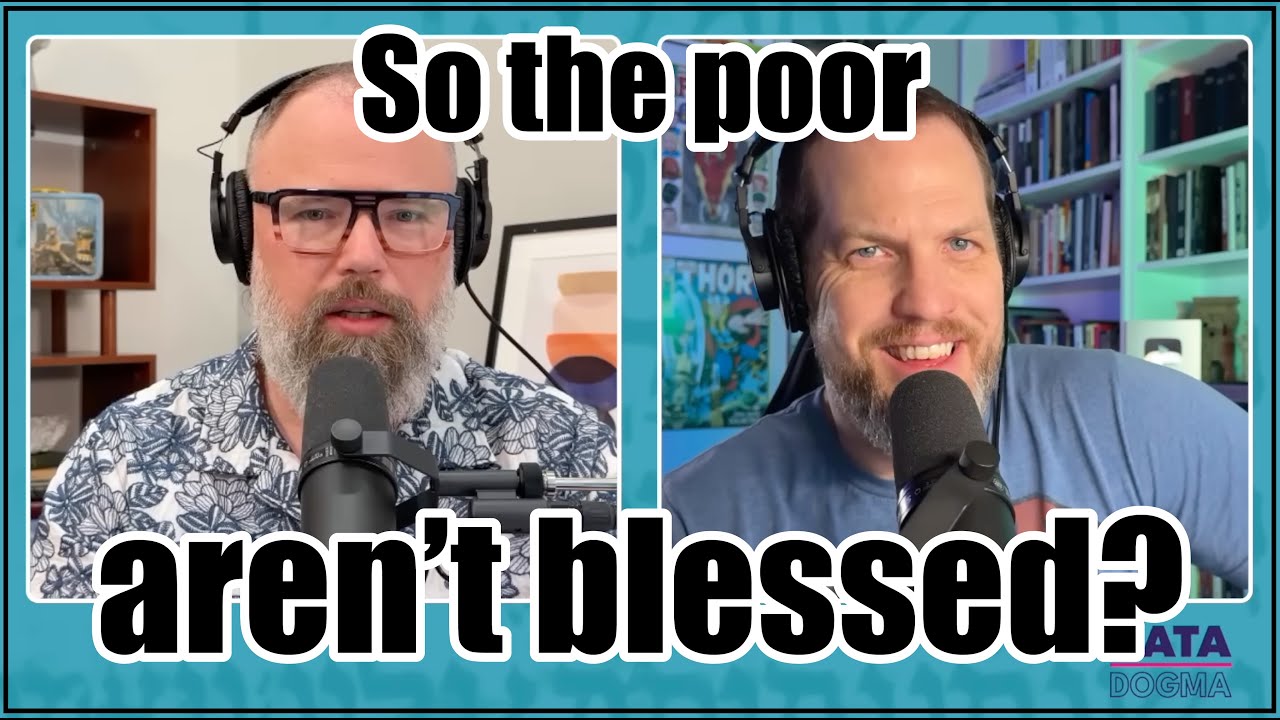
Next time you, you want to put on a fancy sweater or a fancy suit to go yell about how much poor people suck to a congregation of other Christians, sit a few plays out, have a Coke and a smile and you know how to finish that quote. Hey everybody, I’m Dan McClellan. And I’m Dan Beecher and you’re listening. To the Data Over Dogma podcast where we increase public access to the academic study of the Bible and religion and we combat the spread of misinformation about the same. How are things today, Dan? Things are great. Things are great. Just it’s. It. There have been snow flurries all day where I’m at and. Yeah. And none of it’s sticking to the ground, which is good so far. I’m guessing overnight there’s going to be some accumulation, but yeah, I’m not looking forward to that. I know my, I’ve got to take my 16 year old to high school. Pretty like 7:30 is when we leave and this morning it wasn’t bad, but I have a feeling tomorrow is going to be a little more annoying. Yeah, I think your, your, your area gets a little more hard hit than mine. So. Yeah. Yeah, there, there you go. Kind of snuggled up in the, in the foothills. Yeah. Where we tend to catch the. Yeah. The stuff coming over the, the mountain. Oh, it’s a problem. There you go. At least we don’t have as much of the inversion and. Well, there you go. If you’ve, if you’re not familiar with Utah, you’ve probably never heard of inversion and count yourself lucky. Yeah. Salt Lake, the Salt Lake Valley has a very lovely little weather phenomenon that happens and, and it makes, it makes for fun air. I frankly, if you’re, if your air is see through, you should feel grateful. That’s all. Yeah. Yeah. Don’t rub it in. It’s not always the case. Yeah. Anyway, look, we got a whole show that we need to do here. We got a whole, a whole diddly do that we’re doing. Our first segment is going to be What Is That? And it is fascinating, it’s disconcerting. It is disappointing but very, very interesting. We’re going to be talking about the Slave Bible and then we’re going to go for the second half of the show. We’re going to be talking about wealth and is it okay? Hmm. We’ll see about that. Yeah. So let, so we’ll have a little fun with that. But first, What Is That? And then like we said, what is that? What is the Slave Bible? The Slave Bible? Yeah, yeah. This is a name that’s been given a colloquial name that’s been given to a publication that was published in 1807. And its actual title is Select Parts of the Holy Bible for the Use of the Negro Slaves in the British West India Islands. So, yeah, it, it is not. Was not originally framed as a Bible. It’s always been explicitly framed as select parts of the holy selections of kind of thing, which, which is something that was popular, you know, back in the 1600s and the 1700s. You had like the Soldiers’ Bible, which was like a hundred passages that was. Soldiers kept a little copy on them and it was, you know, I don’t know, inspired them to, to hide better or, or kill people better and, or, you know, made them feel like war was, was something God was with them for and. Right. And so this kind of stuff had been done before. And the idea here was to take out about 90% of the Hebrew Bible and about 50% of the New Testament, leaving just a handful of passages so that they could get a feel for what the Bible is. And, and basically it was intended to be a missionary instrument. It was intended to allow enslavers to preach the Gospel to their enslaved folks without them getting their heads filled with ideas about freedom and about escape or deliverance or redemption or anything like that related to enslavement. Something tells me they skipped Exodus. It just feels like that was, that would be a good one to just pass over. They skipped the first 18 chapters of Exodus. Okay. They do include the Ten Commandments and a little bit more, but it’s, it’s actually very peculiar. You can, you can find a copy on like archive.org I think Google Books probably has a PDF as well. But you go through and it’s like Genesis chapter 1, 2, 3, 6, whatever reason, they, they take out 4 and 5, then you got 7, you got 8, and then we’re going to skip to 18, and then we’re going to skip to 37 and then 39, and then it’s like 40, 41, and suddenly we’re in Exodus, Exodus 18
. There are a handful of passages that refer to that. And then you get, you know, a smattering of First Samuel and First Kings, and suddenly you’re in Job and it’s like the. It’s like the first two chapters of Job and the last three chapters of Job, and then you’ve got a handful of Proverbs. No Psalms. They completely cut out the Psalms. And then we get to the New Testament and it’s a little more of the New Testament. You get a little more of the Gospels and Acts. You get a. A little more Jesus in your. In your diet here. But you’re cutting out a lot of the references to. To deliverance. You’re cutting out a lot of the references to salvation in a temporal sense. Yeah. And this was something. As far as I know, it was just published the once. It does not seem like it made a huge splash on the literary scene. Well, especially considering it was specifically for a very small group of people. Yes, probably many of whom. Most of whom were unable to read anyway. So it does seem like that you’ve got a very small audience for this particular publication. And the reason a lot of people are aware of it now is because the Museum of the Bible has had one. There are only three copies known to exist still, and the Museum of the Bible has had one of them on display. And it started to gain attention, and they were like, all right, we’re gonna do a whole. We’re gonna do a whole feature on the Slave Bible. And, you know, they. They brought in some copies of advertisements for the sale of slaves and. And stuff like that and. And. And gave it a whole treatment, including one thing. At the end of the whole exhibit, you are given, like, a card with a question on it, and you’re. You can write down your answer on the bottom of the card, and then they’ll put those on display. And so one of the cards is. Is like, is the Slave Bible still the Good Book? Or something like that? Which is. Is problematic. But I have a friend named Jill Hicks-Keaton, and she wrote a whole book called Good Book, and it’s. The subtitle is How White Evangelicals Save the Bible to Save Themselves. And. And she did a whole piece on this exhibit because she makes the interesting point that the way a lot of folks are talking about the Slave Bible today, and particularly the Museum of the Bible, is as this kind of aberrant perversion of the Bible. It’s supposed to be like, look what they’ve done to my boy. Kind of, you know, it’s unrecognizable now. They’ve taken out all the parts that cancel out the parts that they left in. And, And this is incredibly problematic because it tries to make it seem like as long as we have the whole Bible, we know slavery is a bad thing. And the reality is that that’s a pretty new innovation. That’s, that’s a technological advancement that is pretty recent in the history of reading the Bible. But there. And, and there’s some weird things that, that Jill points out that the Museum of the Bible does to kind of massage the facts a little bit. Oh, interesting. Yeah, they. One of the things that they have there on. Well, this ran from 2018 to 2019. It’s not on. Like, I think it’s still there, but the exhibit is not there anymore. But they have on display a little quote from a Reverend Beilby Porteus, Bishop of London. And he’s, he’s giving instructions to some missionaries. And, and the Museum of the Bible frames this as a reference to the publication of this book because part of this quote says, prepare a short form of public prayers together with the select portions of Scripture, particularly those which relate to the duties of slaves towards their masters. So this would be like the, the Greco-Roman household codes that we find in. In places like Ephesians. Right. And stuff like that. Servants, be obedient to your masters sort of thing. The problem is there are two ellipses in here that eliminate quite a bit. Okay. So because, because this Reverend is not referring to the Slave Bible at all. This Reverend is actually talking about how the school masters in the Caribbean should do all these things to kind of arrange their curriculum in a way that will allow them to teach enslaved folks to read without again filling their heads with the freedom nonsense. This is from the Bishop of London at the time. Yeah, this, this is a letter that’s being written because of the bishop. If it’s the Bishop of London and it’s. If it’s the same as it is today. I think the Bishop of London is like the third most important person in the, in the Anglican Communion. So it’s like that’s a big deal person. I do not know if. Let’s see. Successively Bishop of Chester and of London was a Church of England reformer and a leading abolitionist in England. Oh, he was an abolitionist. Okay. This must have been after. Well, no, he, he, he. He only wrote this. He wrote this in 1808, which is a year after the Slave Bible was published and he died in 1809. Okay, so, I mean, not all abolitionists were good at it. He was the first Anglican in a position of authority to seriously challenge the church’s position on slavery. Okay. Alrighty. Well, I’m going to read this. This quote. The schoolmasters, therefore, may be empowered to require their attendance in the schoolroom on Sundays as well as that of their children. And the clergyman of the parish in which they reside will probably have the goodness to add his influence and exhortations for the same important purpose and also to prepare a short form of public prayers for them consisting of a certain number of the best collects of the liturgy, the creed, the Lord’s Prayer, and the ten commandments, together with select portions of scripture taken principally from the Psalms and proverbs, the gospels, and the plainest and most practical parts of the epistles, particularly those which relate to the duties of slaves towards their masters. The schoolmaster also may be directed to read to them a plain, useful discourse selected from some of our English printed sermons or from the abridgment of Bishop Wilson’s instructions for the. And then it goes on from there. And so did you. Did you notice one of the things that he named that is not in the select parts of the whole? The psalms. The psalms. Psalms are nowhere to be found. Yeah. Which is. Yeah. Odd. I don’t know if they just didn’t want the enslaved folks to be singing psalms. I mean, there are lament psalms, there are complaint psalms. Maybe they just don’t like complaining. Yeah, just. Let’s just leave that whole part out. But so, so what Porteus is talking about is just, hey, schoolmasters, if you’re gonna do a Sunday lesson, you should, you know, do it like this. Right. And. Yeah. I am now very curious about the abolitionist bent of the person responsible for this letter. It does seem a little weird with him saying, you know, make sure you emphasize the, you know, the servant. This. The. The slaves, obeisance to their masters sort of thing. Yeah, I think that’s a little. That’s a little weird. But me. You know, also, the other thing is, that was a tightrope walk, right. You didn’t want to fully and, you know, inflame the. This. The. The slavers. You didn’t want to enrage them. You wanted to. It sounds like this was trying to be subversive. Like, let’s. Let’s get. I guess one of the things that confuses me and I’ll just throw this out to you, is why would these. Would the church and these slave holders want their enslaved people to be Christian. I guess I don’t, I don’t understand why they would want that. It seems like that would somehow put them on similar footing. It would be. You know what I mean? Like. Yeah, it seems like a, and it’s a way, you know, the whole thing about being a slaver, a slave owner, a slaver, an enslaver is that you dehumanize these other people and it seems like enlisting them into your belief system rehumanizes them to some extent. And, and this is there. The history of Christianity’s curation of slavery and engagement with slavery is so horrifying and also fascinating. Yeah. Because there were times when they actually did dehumanize them and rationalize them as other creatures. Yeah. As not human. And there were other times when they recognized them as human. They, they were, you know, the Hamites, they were descendants of Ham from Genesis 9
and 10. And at other times they were considered to be other. They were some other human race that is, was not descended from the three sons of Noah. They were pretty happy with the whole situation. Yeah, they, I mean, boom. Yeah, they were busy wrestling with all of the money that they were making. I, I thought you were going to go another direction in reference to how they sometimes increased their, their supply of, of enslaved folks, which is. Yeah, that’s another thing they did. That’s another thing. But different kind of wrestling. Then they had to wrestle with, okay, if we do allow them to become baptized, does that mean they have to be free now? And, and for a time there were enslaved folks who would, who would become Christians and they were like, peace out. And they were, you know, would run off or, or something like that. And so you had to have local and regional legislation that would be like, no, that you don’t get to be free just because you became a Christian. I mean, look at the Bible. The Bible. And one thing that’s included in the so-called Slave Bible is Ephesians chapter six, which is one of the main parts where it talks about the enslaved person’s duty duties to the masters. You’ve got: “Servants, be obedient unto them that are your masters according to the flesh, with fear and trembling, in singleness of your heart, as unto Christ; not with eyeservice, as menpleasers; but as the servants of Christ, doing the will of God from the heart; with goodwill, doing service, as to the Lord, and not to men: knowing that whatsoever good thing any man doeth, the same shall he receive of the Lord, whether he be bond or free.” But interestingly enough, they wanted that so bad, they didn’t divide up any chapters. Like all the chapters are whole, they just omitted chapters. They wanted that so bad they had to leave in what comes next. And: “Ye masters, do the same things unto them, forbearing threatening, knowing that your Master also is in heaven; neither is there respect of persons with him.” So they left in the verse telling enslavers that you’ve got to be nice because God’s going to treat you however you treat your enslaved folks. Yeah. And so it’s a fascinating look at this stage in this ongoing negotiation between Christianity and slavery and what’s going to happen here. And there’s a, there’s a fascinating paper that, that I read by a scholar named J. Albert Harrill, and it’s in Religion and American Culture. That’s the name of the journal and it’s called “The Use of the New Testament in the American Slave Controversy: A Case History in the Hermeneutical Tension between Biblical Criticism and Christian Moral Debate.” And so it goes through in, in quite a bit of detail, the basically mental gymnastics that they had to go through as you had the pro-slavery faction and the anti-slavery faction both trying to use the same tool. Right. As an instrument of, to defend their worldview and how things changed. And I’m, I want to, if it’s okay with you, if it pleases the court, I, I want to read just a, a little bit of from the conclusion because it paints just a fascinating trajectory. I’ll allow it. I, I appreciate that. “Because of its moral imperative against the pure evil of human chattel bondage, anti-slavery and abolitionist Christianity was forced away from biblicism into a less literal reading of scripture.” So a literal reading of scripture is pretty clear. Like, slavery— Yeah, that’s not going to help you with the, with the abolitionist position. Yeah, we’re for it. And so they tried a bunch of different ways to try to try to make this make sense. Like I was reading through this for a time. They were like, oh, well, the King James Version says “servant.” It doesn’t say “slave.” So none of the people in the Bible are actually slaves, they’re servants. This is a voluntary thing and that. As long as we don’t look at any other possible translations. Yeah, and, and you see vestiges of this today, like Frank Turek in a debate with Michael Shermer was like, the only slavery in the Bible was voluntary debt slavery or a means of, you know, stopping captives from fomenting rebellion or something like that, so that we still have the, the vestiges of that rationalization. And then other folks were like, well, you know what, it turns out there were actually no slaves in Israel during Jesus’s day. And like, you had a bunch of different otherwise well meaning abolitionist folks who were like, you know, this, this cannot stand, this aggression cannot stand man. And we’re trying to just come up with whatever it was. Just throwing the spaghetti against the wall, let’s see what sticks. So anyway, back to the, the paper. The first step in this move was the development of a hermeneutics of immutable principles which advanced an egalitarian reading of Jesus’s Golden Rule as the kernel of the New Testament over against its patriarchal reading by pro-slavery. So they’re like, all right, step one, we need to lay down some immutable principles when we look at the Bible. These things are immutable. These are, you know, these will not be subjected to scrutiny. This view was combined with Whig theories of human progress in history to form a hermeneutics of the seed growing secretly. So this is where you get the apologists who say that this was, you know, this was subterfuge. This was God planting the seed in the New Testament that wouldn’t sprout for, you know, 1700 years. Right. But they’ll figure it out eventually. Yeah, it might take a, you know, a few thousand generations, but that’s a… That is a deep planted seed. Yes, yes, it is a very slow seed. Yet a growing doubt about using egalitarianism to interpret the Pauline household duty codes led radical abolitionists, especially Garrisonians, admittedly not a representative group, to the second step, the total abandonment of biblical authority in favor of secular arguments from conscience. So the Garrisonians were like, we’re not waiting. This is taking too long. We’re, we’re skipping over trying to rehabilitate the Bible and we’re just going to go straight to secular arguments. Some African American abolitionists, such as Frederick Douglass, did not want to go that far and worked with white clergymen to save a biblical understanding of Christianity. These abolitionists were more representative because of their eagerness to build popular support. However, other African Americans, such as Denmark Vesey and Nat Turner, rejected white Christianity altogether and took the third step, that of violence. They employed a hermeneutics of biblical typology and the conjure of apocalyptic eschatology. So that’s a lot of, a lot of ten dollar words right there. Yeah, yeah. But the, the idea is, is basically they looked in the Bible and they were like book of Revelation
time. It’s, it’s the final, the final countdown, just like they always sung about. And, and they were on the side of God. So that would be the, the, the conjure of apocalyptic eschatology. The political imperative of pro-slavery, in contrast, fostered a move toward literalism. Emboldened by the findings of biblical criticism that the New Testament writers did not condemn slavery as abolitionists would wish, but instead express views similar to those in the wider Greco-Roman slave culture, biblical scholars argued that the New Testament contained passages that did not merely recommend subjection of slaves to their masters. Those passages signaled acceptance of an organic model of civilization for which such subjection was essential. Most embarrassing for today’s readers of the Bible, the pro-slavery spokesmen were defending the more defensible position from the perspective of historical criticism. In other words, one of the groups had it right. Yeah. Unfortunately it was not the abolitionists. Well, had the Bible right? I think the abolitionists may have had. Yeah. May have been on the correct side of history. Yeah. As, as the great poet once said, we lost the war. I don’t think that made us. No. What did he say from Firefly? You were wrong and he’s okay, don’t think we were wrong. We just lost the war. And then the, the essay goes on to say it carries implications beyond its case history of slavery. The opposing values of literalism and moral intuition remain at odds in American religious culture, shaping contemporary debates over race relations, military conflict, capital punishment, poverty, abortion, full emancipation of women, and lesbian and gay rights. I think, I think one of the things that’s interesting and one of the things that, that should be instructive is in how people address the Bible at, at this moment in history. It should be instructive that almost nobody believes that slavery is okay in a modern context. Yeah. And, and nobody should believe that it’s okay. Like, that is a, that is a very obvious, easy moral stance to take that, that slavery is absolutely abhorrent. Yeah. And if we can, if we can agree on that, then we can move forward with addressing other issues, things like LGBTQ questions from that perspective, saying, look, the Bible was a product of its time, was a product of its, of, of its cultures, and wasn’t purely just, you know, God raining down words that must last in perpetuity. Yeah. Forever. Amen. Unfortunately, I have actually seen people in, people who claim to be Bible literalists who then when you confront them with the idea of slavery and say, surely we can agree that slavery is wrong, because they’re so tied to the literal idea, to the literal interpretation of the Bible, they can’t say that. They tie themselves into this, this system that forces them not to be able to say just: slavery is wrong. Well, I see, I see an awful lot of Christians today, conservative readers of the Bible, who are willing to say that slavery is wrong and try to credit Christianity for abolishing slavery based on the Bible. And this is one of the points I wanted to make about this. One of the, one of the things that I think this paper does so well is demonstrate this changing tide, which is all about consensus. Because leading up to the 1600s and the 1700s, overwhelmingly the consensus among Christians was: slavery is good. There were occasional, you know, you had anti-slavery representatives bubbling to the surface now and then. And then once we get to the Enlightenment and questions of universal human rights, the natural law, all this kind of stuff become more widespread and suddenly there’s more focus on this. And you get the Quakers who, like, were the first group among the Christians to really take a hardcore anti-slavery stance. Right. And what happened was slowly the consensus shifted. And this paper is charting the different arguments that were taking place during this pivot, during the time period when the consensus was shifting. And it’s saying that there were folks who were like, okay, we’re going to take this slow and easy and we’re going to do this right. And they weren’t convincing many people. And there were other folks who were like, oh, we’re just going to skip to the end. And they weren’t convincing many people. And there was a group who was—if you’re looking at the Bible as the rule book—they were right. Yeah. But ultimately they lose out because what happened is—the arguments, as not good as they were, they were good enough for enough people to say, based on the moral conviction of the wrongness of slavery: “I’ll buy that. Yeah, I can live with that. I think that argument works.” And so everything slowly shifted and now you have the folks, the Christians who say slavery is evil. It’s always been evil. God was just trying to hold Israel’s hand because, you know, God couldn’t just overturn everything all at once. That would have caused all kinds of economic problems. And, you know, it’s the economy, stupid. And now we’re saying Christians are responsible for doing it all because the Bible inspired them. Because obviously the Bible is anti-slavery. And these arguments are still awful. Yeah, but because of what you said, the overwhelming majority of people, Christians included, can agree slavery is a moral evil, and their argument doesn’t have to be that good. Like, well, yeah, in the first place, but now since everybody agrees, now the argument is kind of pushing back a little bit and saying, no, no, it was the Bible all along. I think they’re trying to take advantage of the consensus to try to gain a little ground back. I mean, history, I’ll give. Here’s what I will grant them. It is that I think that it was Christians who were willing to take the, you know, allow that worser argument to win the day because they, because they had their moral center in place. Who. It is them who enabled the abolition of slavery. It’s people like. And I’ve, I’ve read a lot about this guy because I happen to be related to him. But Henry Ward Beecher was, was a huge. He was literally like the, he was the most famous man in America, at least according to his biographer, whose name I’m forgetting, but that’s the title of the biography, is The Most Famous Man in America. Oh, really? And he was, and he was such a popular orator. He was a preacher. He was a, I believe, a Congregationalist. His dad was a fire and brimstone preacher as well. And, but it was his orations and his very, very popular speeches that sort of laid a lot of the groundwork, at least in people’s minds, about, like, accepting abolition as, as a proposition. So. Okay. And then his sister. And then his sister wrote a book, wrote Uncle Tom’s Cabin, and just sort of blew the doors off the whole thing. She was like, oh, I got you. I’ll do you one better. Yeah. Lincoln had things to say about both of those two. Anyway. So the. The author of his biography was Debbie Applegate. Thank you. And then he’s also famous for his 1875 adultery trial. Stop it. Stop it. How dare you. Okay, look, we were just talking about how, you know, you got to be a little squishy on some biblical things in order to make the abolition thing work. Yeah, but I. I think it is. I. I absolutely think there were an awful lot of Christians who. Who caught the vision, and obviously preceding them were the actual people who suffered under enslavement who were speaking out as well. But. But, yeah, I’m. I’m happy to. To acknowledge that. That Christians did. That it was because their. Their moral sense overruled the Bible. Yeah. And they were just able to gin up arguments that were good enough. Right. That they could. I’ll buy that kind of arguments so that they could feel justified in doing what they were doing in light of their. Their ostensible commitment to the Bible. And people are still doing that today. And I think we have, you know, we have. We have other issues. The. The paper talked about a lot of other issues that are. That we’re still in the middle of where the Bible is frequently leveraged as, you know, as the answer to all of this. And there are an awful lot of people who are like, I think it’s the same situation playing out. We know what the Bible says, but our moral sense tells us correctly, this is a. No, no, this is bad. And I think we’re starting to reach a critical mass, particularly with things like, well, I think we’re still a ways away, but I think the. Things are starting to tilt a little bit when it comes to, like, LGBTQ inclusion. There are an awful lot of Christians who are. Are a lot more inclusive, and even some of the. The. The scholarly evangelical voices from the end of the 20th century who were among those who were, you know, affirming that the New Testament is not affirming of LGBTQ identities, have. Have now published books saying, I was wrong. I. Yeah, I now believe that the Bible does open the door for us to walk inclusion through. And. But I think that the other. The other lesson to be learned. I guess what the point that I was trying to make is that one of the lessons to be learned is the Bible doesn’t have to have an open door. Like, the Bible is the product of its time. It is. It gets things wrong. It conflicts with its own self. Yeah. So, like, to some extent, with, you know, as. As issues come up and as we start to explore things in different ways, in ways that have never been explored before. The Bible is not going to be particularly instructive. Yeah. And should. And you know, use it in ways that it is useful, but also be willing to let go of sort of traditional, like, you don’t need the Bible to have a moral center. Yeah. And. And you’re. So you would have sided with the Garrisonians. Indeed. Who I think I am. A lot of my advocacy is. Is the same. I’m saying, hey, yeah, we, we know better. Like, there, there are so many things that we’ve just been like, yeah, no, no, thank you. That we have rejected from the Bible and there’s nothing telling us, oh, it’s okay to reject that. But this. No, the can’t cross that line. Like, we can cross whatever line we want because it all comes down to consensus. That’s, that’s something that I’ve, that I’ve tried to a point, I’ve tried to make a number of times when it comes to the Bible’s authority, that authority is whatever the group agrees it is. Yeah. And they can overrule it whenever they want. Literally. Yeah. Whenever they want. As long as the consensus is what it is, then, you know, that reifies authority. Consensus. Well, and the trick is you have to pick and choose because like we say, the Bible keeps contradicting itself. So you don’t get to just believe everything. So you have to pick and choose. Might as well pick and choose the things that comport with your own more moral center. Yeah. And don’t pick and choose the slave Bible. Don’t. That was, that was an example is right out. We all need to agree forever slavery is out. That was, that was the, the picking and choosing of 1807. That again, doesn’t seem like it made a big splash in the, in literary circles. But. But yeah. All right. Well, hopefully, hopefully that, hopefully that beds that, that issue back down. Yes, indeed. So let’s move on to our next segment. Taking issue. And the thing that we’re taking issue with or the thing. The issue that we are taking is the concept of wealth. The thing that brought this up, brought this to my mind was one of your videos that I saw a bit ago that was talk. You, you, you highlighted a pastor. I don’t know where this guy was from, but he was, he had a, he had, he had a very Alex Jones vibe to him. And he had a little Lacoste sweater on. Yeah. That he was kind of busting out of. It was a little weird. I think he was in New York. He’s a very barrel chested man. I don’t know. I don’t know that the sweater vest is the right look anywho. Or the cardigan or whatever. Anyway, he, he was talking about how some people very stupidly say that, that, that Jesus said blessed are the poor. Yeah. And, and, and this, one of the things I really didn’t like is that he started off by saying. What did he say? Some oddly gendered preachers. Right? Yes, he did. And then it showed video of Bishop Mariann Budde from D.C. and I was. Like, she’s the one, she’s the one that, that confronted Trump while he was in her church. He’s. Yes, she’s the one who asked Trump to show mercy to other people and. Then was demonized, was pilloried for asking for mercy. Yes, exactly. While giving a sermon, people are like, shouldn’t be so sermonizing. She’s literally giving a sermon in her church. In her church she is. Why are you politicizing the sermon to all the politicians? What’s happening? Yeah, Anyway. Yes, so, so he, so he does get his, his little gender dig in. Yeah. That didn’t make any sense. No. And, and, and he also calls out Episcopalians. He’s, he’s also like these weird gendered Episcopalians saying all this stuff. But Jesus didn’t say blessed are the poor. He said, blessed are the poor in spirit. And you said, excuse me, au contraire. Yes. That’s not how I read the Word. Because he’s talking about the Sermon on the Mount in Matthew 5:3
. And the, the interesting thing is that the Sermon on the Mount is not the only place where we see a collection of Beatitudes. We also see it in Luke chapter six, only there. It’s not known as the Sermon on the Mount. It’s known as the Sermon on the Plain. And it’s basically like the, in rough outlines. I saw, I saw a video of a guy giving a sermon on a plane and I was like, dude, just sit down. Nobody needs to hear that. Lose the guitar. I, I assume this is a-i-n, not a-n-e. Correct. Correct. Okay. Yes. The, the rain in Spain falls mainly on the Sermon on the Plain. Yeah. And so in rough outlines, it’s, it’s basically the, the same sermon, but the details are, are different in a bunch of different ways. And, and this presents a bit of a problem for folks who think that’s, you know, the folks who accept univocality and inerrancy and things. Right. Because it sounds like Jesus is like on a hill and he gives a sermon and then he’s like, hey, let’s. Let’s go down here. And then gives mostly the same sermon but somewhat different and say, what. Why is Jesus doing this? It’s. Why has he got a. It’s the same set we heard last night. You got to write some new material there, Jesus. But In Luke, chapter 6, verse 20, Jesus does say, blessed are the poor. Makarioi. And this is. And you know, there’s no qualification there. In Matthew 5:3
, it does say blessed are the poor in spirit, which seems to be a reference to the humble. And it does. It does not say only the people who are humble because of. Of, you know, whatever is all humble folks, which obviously will include an awful lot of poor people. But in, in Luke. Yeah, it just straight up says blessed are the poor. It doesn’t seem like the humble would include Pastor Lacoste, but that’s just a sense that I have. Yeah, I love that he was, he was like, his. Talking about how he. He ministers to the poor and he prays for them and, and more than a lot of people and, and like, not that sincerely, though. It doesn’t. Yeah. Something tells me that you just, you. You pray down to them. You don’t. You don’t pray with them. And then he talked about his brother. He said his brother lived on the street for a while and he was a wild man. And what did he say? He. He wasn’t humble and that nobody could tell him what to do. I wanted to be like, it sure doesn’t sound like you’re the kind of guy who lets other people tell him what to do. Right. Yeah, exactly. I wonder if this runs in the family maybe. Right? Economic status is not the, the main factor here. It’s not the problem. Yeah, yeah, yeah, that’s. That’s probably not it. But. But yeah, Then, then he starts crapping on the poor and talking about how they’re. They’re not humble and that they are. Are haughty and, and all this kind of stuff, which, which was particularly bizarre. Yeah. Because it’s like, if you’re. What part of the Bible have you, like, not yet gotten to? Because, I mean, I. Maybe you just got to Matthew 5:3
and were like, oh, I’m going to write a sermon on this and I’m going to stop reading the Bible. I’m. I’m going to start at Matthew 5
and end at Matthew 5:3
. And that will be the, the beginning and end of my reading of the Bible. And then I’m gonna put on my little alligator sweater and I’m gonna go yell at, at my congregation. But yeah, the, the message that the poor are blessed is not just limited to Luke 6:20
. It is something, in fact the New Testament, interestingly enough, Jesus’s followers were, were overwhelmingly, at least as far as we can tell, seem to be from the lower economic half of 1st century Judea and Galilee. From, from what we can tell, there were not a lot of incredibly well off people. We do have the story about the rich young ruler and Joseph of Arimathea, and there are some examples of people who were pretty well off. But for the most part, his following seems to be represented as not a bunch of incredibly wealthy people. And the message of Christianity in the earliest years seems to have been directed at the poor. When the first time we get like Roman accounts of Christianity, like Pliny, I believe, the Younger describes Christianity, is it Pliny or is it Tacitus? I don’t. One of the, like early 2nd century Roman historians slash statesman, slash authors refers to Christianity as a religion for women and slaves. So. Which would suggest that this is still, you know, low on the economic ladder. But the message of Christianity seems to be directed in the direction of the poor as well. And in addition to the parts where you, in addition to Luke 6:20
and elsewhere, you also have condemnation of the wealthy. And. Yeah, it seems like that happens a lot. Yeah, it does, doesn’t it? Like, I can think of several, you know, the camel and the eye of the needle thing. I can think of several things just off the top of my head and I’m no Bible expert, but like, like, yeah, seems like Jesus himself said frequently, you know, sell your stuff if you’re wealthy. Yeah, that’s what, what happens after the rich young ruler comes to Jesus and says, what do I have to do to earn eternal life? And Jesus says, you know, starts rattling off commandments and is basically like, you know, the law. And, and then the, the rich young ruler says, oh, I’ve been keeping all the commandments since my youth. I’ve done all that. What more what, what more do I lack? And Jesus says, sell all that you have and, and give it to the poor poor, and then you will have mansions in, in heaven or something like that. And then it describes the rich young ruler as going away sad or dejected because he had lots of stuff. Yeah, and then, and then Jesus says how difficult it is for the, or how difficult it will be for the wealthy to enter the kingdom of heaven. And. And that’s when his followers are like, what’s going on here? And then he gives the whole. You know, it’s easier for a camel to go through the eye of a needle than it is for a rich man to enter the kingdom of heaven. And his followers are like, well, who then can be saved, master? And he says, with humans, with mortals, this is impossible, but with God, all things are possible. And you see so many people trying to turn this around to be the exact opposite of what it is. It’s pretty clearly a. An insistence that you cannot serve God and wealth because your heart will be with one and not with the other. It’s like, pick one. Yeah. You want to be rich, you want to go to heaven. No one can serve two masters. Yeah, exactly. For either he will. He will hate the one and love the other, or he will be devoted to one and despise the other. Yeah. And so when. And you know, there are people who are like, oh, the eye of the needle is one of the. One of the leaves, one of the smaller doorways that’s built into the larger city gate. And it was called the Eye of the Needle because if camels had to go through it, they had to get on their knees and they had to take all of the luggage and. And all of the stuff off of them, and they had to go through with carrying nothing. And so that means in order to. For a rich person to enter heaven, you. You have to be, you know, willing to. To give up everything and. And. And on and on and on. And. And this is entirely made up. Those. Those doors are medieval in origin. They’re called wicket gates. They start in Europe, medieval period. There’s no indication those doors existed anywhere in, around or near Jerusalem in the first century CE. And so it definitely was not that. And then, yeah, I mean, it seems. It seems clear, like, even if there was such a thing as the little door that the camel can barely fit through, like, the. The concept is still the same. Rich people, like, you have to get. Like, rich people don’t get into heaven. Like, it’s almost impossible for a wealthy person, by Jesus’s reckoning, to get into heaven. Yeah. So then we stumble on the problem of the prosperity gospel, you know, led by people like Joel Osteen and Paula White and Creflo Dollar, which, you know, these guys, these people are incredibly popular. They themselves are insanely wealthy because they, you know, and what they preach is this idea that if you. If you give me money, if you, sorry, if you give the church money and somehow it magic magically flows to me, then, then you will have everything you need and wealth will flow to you. And nobody seems to notice that. A, that doesn’t work and B, it seems in contrast with a lot of the stuff that you read, especially in the New Testament. I did some research and tried to figure out what scriptural references prosperity gospel preachers use to justify their position, and it seemed almost exclusively to come from the Hebrew Bible. Yeah, well, and, and that’s because, like I said, that most of the New Testament is written towards overwhelmingly poor people. The Hebrew Bible is primarily written by the elite for the elite and is, you know, a lot of it is written by the, this, the royal scribes and things like that. So they’re writing from entirely different perspective. Right. And, and they’re still in the, they’re still in this, you know, kind of kingdom perspective where we got kings, we got rulers, we’re in charge, everything’s good as long as we’re in charge. Where in the New Testament it’s kind of, you know, our guy, our guy got crucified so we lost the battle. But. And they’re kind of writing from another perspective, so. Right. Yeah, you have to go to the Hebrew Bible if you want to try to make being wealthy sound good. And it’s not like it’s, I mean, you know, there are, there are. The scriptures that I found were things like Proverbs 14
that said something about all hard work leads to profit or you know, Proverbs also had a thing about steady plodding brings prosperity. And so there, you know, there were all these, there were a lot of scriptures that, that definitely didn’t condemn wealth. And you know, like you say, you, if you’re writing for a king, you, you’re not going to write about how bad it is to be a king. Yeah, it’s unlikely that that’s where you’re gonna, where you’re gonna go with it. Yeah. And you do have some interesting perspectives in the, in the Hebrew Bible like the, the 8th century prophets and others are, are kind of mad at the wealthy folks. And you do have some folks who, who take the “no king but God” kind of perspective. But yeah, there, there are an awful lot of pro-monarchy folks and, and pro-wealth and, and Proverbs is like that too, like Proverbs 31:10
in the King James Version. Who can find a virtuous woman for her price is far above rubies. The heart of her husband doth safely trust in her so that he shall have no need of spoil. She will do him good and not evil. All the days of her life. She seeketh wool and flax and worketh willingly with her hands. She is like the merchant ships. She bringeth her food from afar. She riseth also while it is yet night, and giveth meat to her household and a portion to her maidens. She considereth a field and buyeth it with the fruit of her hands. She planteth a vineyard. She girdeth her loins with strength and strengtheneth her arms. She perceiveth that her merchandise is good. Her candle goeth not out by night. She layeth her hands to the spindle and her hands hold the distaff. She stretches out her hand to the poor. Yea. She reaches forth her hands to the needy. And. And you know, it goes on like that. Give that woman a break. Yeah, she is, that is a hard working woman right there. This is the Proverbs. Is, is proud of a hard working woman. And I think there’s a, there’s a part. She maketh herself coverings of tapestry. Her clothing is silk and purple. So she wears expensive clothing. Yeah. Which is what a certain somebody who will go unnamed, Paul of Tarsus says is sinful. Yes. That’s the one who’s not modest. The person who, the woman who braids her hair. The woman who wears jewelry. Right. Who has fancy clothes. But for Proverbs, no, we’re all about the purple. And. Yeah. Purple silk and, and purple is, you know, sort of notoriously throughout history, the sign of wealth. Because it’s the hardest. It’s. It’s the hardest dye to get. Yeah. And then her husband is known in the gates when he sit. When he sitteth among the elders of the land. She maketh fine linen and selleth it, and delivereth girdles unto the merchant. Strength and honor are her clothing, and she shall rejoice in time to come. She openeth her mouth with wisdom and in her tongue is the law of kindness. I. I feel like, I feel like this is not a good marriage. I feel like he is just sitting there one sided. Yeah. With the other guys. And she is working her tail off trying, trying to make things good in the world. He’s hanging out in the city gates to all hours of the night. He’s podcasting with his buddies. I promise you this, this marriage, once the kids are, are out of the nest, that this marriage is going to end. Yeah. And. And she’s taken all of her stuff with her. Yeah. Yeah. He’s, he’s, he’s gonna be singing a different tune in the city gates. He’s. What’s that old song? That’s my story and I’m sticking to it. Yeah, yeah, there you go. Just last week she threw that Herbie Hancock in the attic. So, so that excuse isn’t gonna work, but yeah. You’ve got very different perspectives on, on wealth between the Hebrew Bible and the New Testament and so your prosperity preachers who, who are basically trying to enrich themselves by, by lying to everybody else that you will magically become wealthy if you, if you do all these things and just preying on their insecurities and their faith. Yeah. Like I think of all the, all the, the sick, twisted things to do is to take advantage of people who have a lot of faith and hurt them just so you can enrich yourself. Yeah. And then when your promises don’t come true, chastise them for having, for not having been faithful enough. Tell them that it was their fault that they weren’t able to make it happen. That they didn’t do the things that they needed to do in order to be, you know, that they, they just need to pray harder. They need to believe more. There was some doubt in them. There was some blah, blah, blah. And of course there was doubt in them. Yeah. Like we all know that’s not gonna work. But you know, they, but these are really faithful people and the people who are the most faithful are the ones who give the most. Who give, who give what they can’t afford to give because they’re, they want to show God what, you know, what they’re made of. Yeah. The, the widow’s mite. Yeah. And, and then, yeah, I think to, to raise people in circumstances like that where you treat it as a true transaction, like if you do this, then God will bless you monetarily, it, it riddles people with anxiety I think because the majority of people are not going to get what they want, get what they think they’re owed from that transaction and frequently go through life feeling like they’re not good enough. Yeah. And if anybody’s not good enough, it’s the folks who wear multi-thousand-dollar suits on a stage to preach to a congregation about how God wants them to be wealthy. Oh yeah, these guys are in multi-thousand-dollar shoes. It’s ridiculous. It is, yeah. It’s, it’s a very, it’s very disappointing to me. And it’s something that, that I, that I think needs to be called out. And one of the nice things is that I, you know, in, in researching this saw plenty of Christian websites calling it out and saying this is not an acceptable theology. Yeah. Yeah. So next time you, you want to put on a fancy sweater or a fancy suit to go yell about how much poor people suck to a congregation of other Christians, sit a few plays out, have a Coke and a smile and you know how to finish that quote. Yeah. Yeah. So, okay, just to wrap things up, I, I think, I think we are, we are just gonna come out directly against slavery and prosperity gospel. I think we’re that. That is now the official editorial position. Of the podcast of the Data Over Pod. No, Data Over Dogma podcast. I’ll get the name of the podcast right one of these days. Ah, it doesn’t matter. It’s the end of the show. Nobody’s listening anymore anyway. Anyway, listen, if you guys are still listening, we appreciate you so much. If you appreciate us back, you can go to patreon.com/dataoverdogma and give a little bit of your hard-earned cash to us. We do not promise that it will make you wealthy, but we do promise that it might give you a little bit of a nice warm feeling to know that you’re helping us out. It will also give you access to an early and ad-free version of every episode if you’re at the right level. And if you’re at the other right level, you can get access to the Data Over Dogma After Party. That’s more content every week for your listening enjoyment. If you’d like to write into us, it’s contact@dataoverdogmapod.com link in the show notes for tour dates. Make sure to jump on that and we will talk to you again next week. Bye everybody.